Get Full Government Meeting Transcripts, Videos, & Alerts Forever!
Get email alerts on the Disaster Recovery topic
No spam. Unsubscribe anytime.
Avery County recovery group outlines housing, rebuilding and aid priorities after storm
Summary
The Avery County Long-Term Recovery Group told commissioners it has identified 165 families with significant storm damage, coordinated with nonprofits to deliver housing and cash assistance, and is working with FEMA and local partners on roads, bridges and private-property recovery plans.
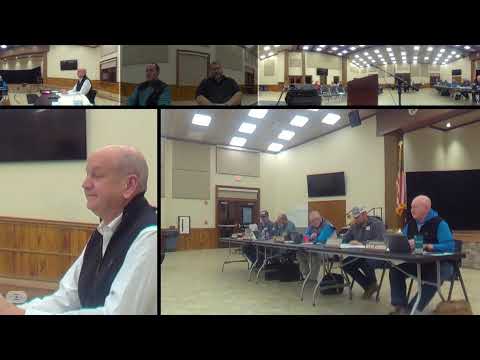
Charles Dunn, chair of the Avery County Long-Term Recovery Group steering committee, told the Avery County Board of Commissioners on Feb. 3 that the group has identified 165 families with destroyed or heavily damaged homes following the recent storm and is coordinating local nonprofits and national partners to meet needs.
“The Long Term Recovery Group is certified by NC VOAD,” Dunn said, adding the group serves as a conduit for faith-based, volunteer and nonprofit organizations assisting recovery. He said the group has cataloged needs, matched those needs to organizations and is developing a phone line and website for residents to request help.
Dunn said 38 of the 165 families have had their needs met, and case managers check on roughly 65 families weekly. He said Appalachia Service Project has funds for three newly built homes in Avery County and resources potentially to build eight more—“we're looking at between 10 and 11 homes,” Dunn said. Samaritan’s Purse has moved into a rebuilding phase and reported four locations where it will place mobile homes, though Dunn said Samaritan’s Purse has privacy concerns and the Long-Term Recovery Group is working on legal steps to obtain a coordinated list so it can follow up with recipients.
Dunn outlined other assistance: the Red Cross is returning to the county and will accept applications for an additional $2,000 in individual assistance for qualifying households; volunteers and small nonprofits are assisting with minor repairs, lost wages and transportation; and the group is cataloging private roads and bridges to prevent duplicate efforts by volunteer teams.
On infrastructure, Dunn said federal guidance for rebuilding bridges is strict: if a bridge is rebuilt in its original bed without changes it may avoid a higher-level certification requirement, but any change to the channel or bed will likely trigger federal “high-rise certification,” which adds complexity and cost.
Dunn also described the group’s organizational structure and partners: committees for housing and construction, donations, volunteer management, outreach to Latinx residents, emotional and spiritual care, and financial and legal counsel. He said the group will use AMY Wellness (Avery-Mitchell-Yancey AMY Wellness) as a fiscal agent to hold donations while the recovery group seeks a separate 501(c)(3) status.
The group provided a public phone number (828-387-5269) and said a website would be available in coming weeks. Dunn urged continued coordination so volunteer groups do not duplicate work and to ensure those in need are reached.
The presentation was an update and no formal action was taken by the board at the meeting.
Ending: The Long-Term Recovery Group said it will provide monthly updates to the county, continue coordinating with FEMA, Red Cross, Samaritan’s Purse, Appalachia Service Project and local churches, and follow up on household needs until they are resolved.