Get email alerts on the Emergency Management topic
No spam. Unsubscribe anytime.
Kodiak city and borough outline joint emergency management changes, propose code updates
Summary
City and borough staff described a proposed five-year agreement to jointly fund emergency management payroll, recommended code changes to name a shared emergency services director and highlighted gaps found in a recent after-action report including the need for 30-day review periods for emergency declarations.
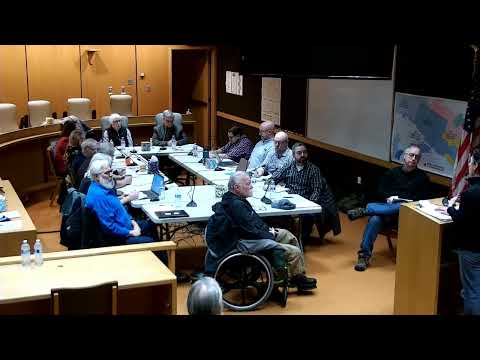
The Kodiak Island Borough Assembly and the City of Kodiak on Feb. 4 reviewed steps to formalize joint emergency management and recommended code updates to clarify who serves as emergency services director.
City staff presented a draft agreement under which the city and borough would split payroll costs for a shared emergency management position 50/50 for five years and said the city intends to designate Rich Gonzales to fill the combined emergency services director role. The packet given to elected officials included a three-page memo dated Jan. 21 from Gonzales and a sample weekly situation report dated Jan. 27–Feb. 2.
The proposal will require changes to local code. The presentation identified Kodiak City Code 2.23.040 and Kodiak Island Borough Code 2.110.04 as provisions that currently designate the emergency services director as the city manager and which must be updated so a shared director can be named. An after-action report from the COVID response was included in the meeting packet and was cited as motivating a number of the code updates.
Why it matters: Officials said clarifying authority and restoring formal review mechanisms could reduce confusion during future incidents and better integrate village and district responders into planning.
Assembly members and councilors raised a series of operational concerns and requested additional clarifications be brought back before either body. Mayor Pat Branson urged that the group address a specific gap uncovered during the pandemic response: lack of a mechanism to automatically review or rescind an emergency declaration. "One of the reasons ... James Turner and myself voted no on the emergency declaration is there was no mechanism to get us out of it," Branson said. He and others asked that emergency declarations be reviewed at least every 30 days and that code language be drafted to reflect that requirement.
Several speakers emphasized the need to broaden the incident command's stakeholder list. Assembly member James Turner and others asked for explicit representation from the Kodiak school district and health-care providers in emergency services council discussions, citing the district's role in sheltering and supporting residents during past tsunami warnings and the COVID pandemic. A school official said district facilities have been used as mass shelters in past events and that the district maintains food and electrical generation capacity relevant to emergency planning.
Communication and inclusion of community media also received attention. An elected official recommended that local radio be included more intentionally in plans because broadcasters offer local communications resources that can reduce community confusion during events.
The packet materials also listed routine products the shared staff will provide, including weekly situation reports covering emergency operations center status, weather, maritime and Coast Guard base security status, and community events relevant to public safety.
What happens next: Staff said the city attorney is drafting the required code amendments and that the emergency services council will review recommended ordinance language before the bodies consider formal adoption. Officials indicated they plan to return with draft code language and with an updated representation list for the emergency services council.
No final ordinance or binding vote on the intergovernmental agreement occurred at the Feb. 4 joint session; the discussion produced direction to staff to prepare proposed code changes and to circulate them for review.
AI generated
The text on this page is AI generated. Summaries, highlights, analysis, and video transcripts are all produced from the original source material.
AI can make mistakes, so if you spot one, and we will fix it for everyone.
Note: the source content is unaltered by us. Any content source we link to, be it a video, an audio recording, or a document, is presented exactly as its publisher released it. That publisher is usually a government body, sometimes an individual official or another organisation.