Get Full Government Meeting Transcripts, Videos, & Alerts Forever!
Get email alerts on the Higher Education Policy topic
No spam. Unsubscribe anytime.
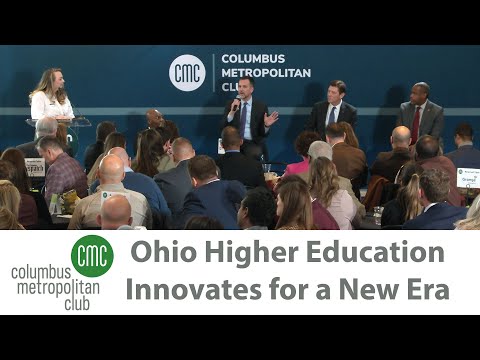
Ohio college leaders push back on political interference and fret about federal accountability measures
Summary
Panelists at the Columbus Metropolitan Club forum discussed proposed state measures such as Senate Bill 1 and federal accountability tools (referred to in the session as the Financial Value Transparency and Gainful Employment initiative), warning of political intrusion and of rising outcomes-based pressure on institutions.
Panelists at the Columbus Metropolitan Club raised concerns about political and regulatory pressure on public higher education institutions, naming Senate Bill 1 and new federal accountability initiatives among the threats they said could reshape how colleges operate.
John Comerford, president of Otterbein University, said proposed state legislation that he and others described as Senate Bill 1 risked political interference in campus curriculum and academic decisions. "Senate bill 1 is specific to public institutions ... it certainly sets a precedent of political interference in higher education that I think is ... a dangerous place to go," Comerford said.
The forum also addressed a federal rulemaking effort described in questions from audience members as the Financial Value Transparency and Gainful Employment act. Comerford cautioned against short-term metrics for degree value: "You gotta take a longer view than, like, they wanna measure 6 months after graduation, what are they making? And that's just not the right way to think about this," he said, arguing that narrower measures could undervalue humanities and liberal-arts training over a full career.
Panelists also warned of broader accountability and market consolidation. In his remarks, Comerford predicted greater state and federal scrutiny and said the higher education market is likely to shrink: "There will be fewer colleges in Ohio in 2 years and in 5 years, and in 10 years than there are today. And frankly, we're overbuilt," he said, calling for institutions to adapt or risk externally driven consolidation.
The Inter-University Council of Public Universities was reported on the panel as taking a neutral stance toward Senate Bill 1, a point noted by Central State's representative.
Why it matters: Changes in state law and federal accountability regimes can directly affect public funding, program offerings and institutional autonomy. Panelists warned that measures that tie funding too tightly to short-term employment metrics could alter curricular choices and the availability of certain majors.
No formal position or vote by the institutions was taken during the forum; remarks reflect speakers' perspectives and answers to audience questions.