Get Full Government Meeting Transcripts, Videos, & Alerts Forever!
Get email alerts on the Student Supports Workforce topic
No spam. Unsubscribe anytime.
Colleges expand food pantries, childcare and employer 'earn-and-learn' programs to retain students
Summary
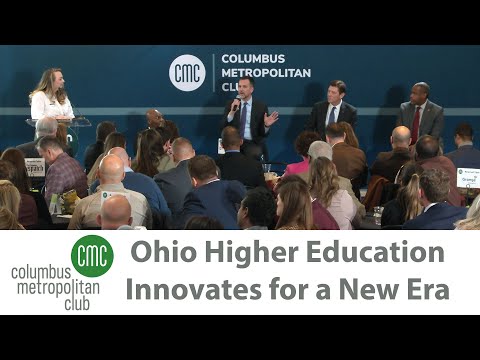
Panelists at a Columbus Metropolitan Club forum described campus food pantries, child-development centers, housing partnerships and employer-integrated credential programs aimed at removing nonacademic barriers to student retention.
Leaders from several Central Ohio colleges described a series of student-support programs and employer partnerships they say are intended to improve retention by addressing food insecurity, childcare, transportation and housing.
David Harrison, president of Columbus State Community College, said the college partnered with Mid-Ohio Food Collective to open a free grocery store on campus and recently opened a child development center. "We got a free grocery store, not just a market, a free grocery store on campus," Harrison said. He added that Columbus State partnered with the Columbus Metropolitan Housing Authority in a pilot designed to study the effect of removing housing insecurity on student success.
John Comerford, president of Otterbein University, said his campus has operated a food pantry for about a decade and recently sought a federal Title III grant to support first-generation, low-income students. "We have had a food pantry on campus for a decade now," Comerford said, and he noted the Title III application and related staffing were underway.
Panelists said employer partnerships are being used to create short-term credentials and degree programs tied directly to workforce needs. Comerford described arrangements in which employers host credentialing and degree programs for employees; Columbus State and other institutions reported employers paying tuition reimbursements or upfront tuition to enable students to work while earning credentials.
Why it matters: Panelists said academic supports alone are not enough to keep many students enrolled. Nonacademic barriers, from childcare to transportation, commonly cause students — particularly working adults and parents — to leave before completing credentials.
Speakers also discussed stackable credentials and pathways that let students earn certificates and later convert those credits to degrees. Otterbein described a partnership bringing Antioch University adult programs to central Ohio to capture adult learners; Columbus State described the use of employer partnerships to create "earn-and-learn" pathways that reduce student debt and allow students to be paid while they study.
Panelists urged local employers and funders to sustain supports that begin on campus and continue into the workplace, such as tuition reimbursement, on-site childcare and affordable housing options.
No formal campus policy changes or votes were taken during the forum.