Get Full Government Meeting Transcripts, Videos, & Alerts Forever!
Get email alerts on the Higher Education Enrollment topic
No spam. Unsubscribe anytime.
Central Ohio colleges brace for a "demographic cliff," widen access through adult programs and employer partnerships
Summary
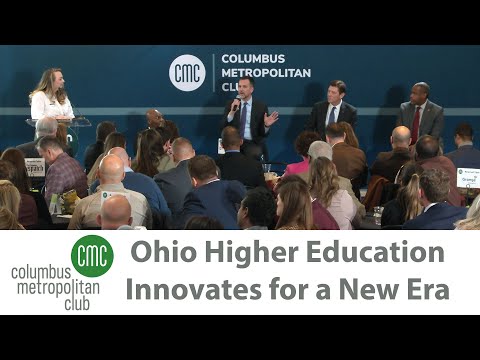
At a Columbus Metropolitan Club forum, leaders from Central State University, Otterbein, Columbus State and Ohio State described strategies — from Pell-first tuition coverage to employer-delivered credentials — intended to offset projected declines in traditional college-going cohorts.
Leaders of Central Ohio colleges told an audience at the Columbus Metropolitan Club that they are preparing for a projected drop in the number of traditional college-age students by expanding programs for adult learners, deepening employer partnerships and adjusting financial aid.
James Orr, vice provost for strategic enrollment management at The Ohio State University, cited research showing a future decline in high school graduates and a lower college-going rate. "In 2008, a researcher and economist by the name of Nathan McGraw ... projected is that starting in 2025 this fall, that there would be a decline in the number of high school graduates," Orr said. He added that Ohio's college-going rate fell from about 72% in 2010 to roughly 66% in 2023.
Why it matters: Colleges statewide rely on tuition and enrollment-driven funding; a sustained fall in numbers of 18-year-olds and a lower share choosing college would put pressure on budgets and on strategies for access and completion.
Panelists described a range of responses. John Comerford, president of Otterbein University, said his campus now meets the full tuition need of students who are Pell-eligible after they complete the FAFSA, an approach intended to attract and retain lower-income students. "If a student's Pell-eligible ... then we meet their full need for tuition with no loans," Comerford said, describing the policy as unique among Ohio institutions.
David Harrison, president of Columbus State Community College, emphasized partnerships with employers and with other universities. He highlighted a set of agreements Columbus State calls "preferred pathway" programs that guarantee admission or transfer opportunities to four-year partners and cited a tuition figure for full-time study: "A full time student at Columbus State pays $5,000 a year." Harrison also described a Tuition Match partnership with Ohio Wesleyan University that aims to keep junior- and senior-year tuition affordable for students who start at Columbus State.
Central State University, represented on the panel by its president (identified in the forum as Dr. Kuti), said HBCU enrollment has remained steady and showed signs of strength after the pandemic. Central State said it had increased campus enrollment-staff capacity to focus on recruiting in Ohio, a change the university described as roughly a 30% staffing increase to support in-state recruiting.
Panelists also described tapping the adult-learner market. Comerford described Otterbein's work with Antioch University to bring adult graduate programs into new markets, and several speakers cited employer-hosted credentialing and short-term certificates as growth areas. "We're doing professional development credentialing, short term certificates, and even degree programs inside the employer for their workforce," Comerford said, describing deals with local and national employers.
Speakers repeatedly framed their strategies as a combination of expanding access for nontraditional students while preserving the features that appeal to traditional undergraduates.
Looking ahead, panelists said institutional collaboration, clearer pathways from certificates to degrees and sustained employer partnerships will be key to offsetting demographic pressure.
Panelists and their roles were identified during the forum and are quoted or summarized above. No formal decisions or votes were taken during the session.