Get Full Government Meeting Transcripts, Videos, & Alerts Forever!
Get email alerts on the Facilities Energy Auditorium topic
No spam. Unsubscribe anytime.
Fairfield Union seeks auditorium lighting overhaul, ties project to district LED energy program
Summary
The Fairfield Union Local School District presented a plan to replace aging auditorium lighting with LED fixtures and approved $37,000 in design fees as part of broader, long-running energy-conservation work that has saved the district roughly $1.45 million since implementation.
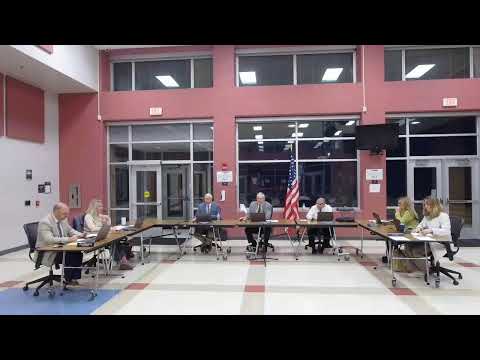
Fairfield Union Local School District leaders told the board on Feb. 20 they plan to replace the high school auditorium's aging lighting system with LED fixtures and modern controls and approved a design-services contract to begin the project.
Superintendent Mister Bellwell said the auditorium uses halogen stage bulbs and legacy equipment that is increasingly difficult to repair or source. He said the district would need to substantially rebuild the stage lighting system to install LEDs and modern controls and that the change could reduce energy use and ongoing maintenance time and cost.
The board approved an agreement for architectural and design services with Harvey Marshall Berlin and Associates, calling for design and bidding work for the “High School Theater Innovation Project.” The agenda lists $37,000 for design services. The motion carried on roll call.
The auditorium proposal was framed as an extension of a districtwide energy-conservation program that began seven years ago. Bellwell summarized that initial LED/conversion project as a roughly $1.2 million investment financed on a 10-year lease/loan; the district has tracked energy savings against a pre-project baseline. He told the board the district has realized roughly $1,450,000 in aggregate savings over the seven-year period and that, after recent chiller and controls updates, year 7 is tracking toward about $228,000 in savings if current trends continue.
Bellwell and staff said the auditorium conversion would be another incremental measure to reduce electric costs and help insulate the district against rising utility rates. He also noted the auditorium is used more frequently now — for classes, choir and drama — which has increased the rate at which lamps fail and maintenance time is required.
Board members did not identify a funding source for construction in the discussion; the approved action was for design services only. The superintendent said the district would return with estimates and next steps after design and bidding, and invited board questions as the project proceeds.
Proponents and staff cautioned that the work will be a major undertaking because of the age of existing equipment and that fixture and control replacement will require temporary disruption of the stage area during construction.
The district’s long-running LED program, as described by Bellwell, included an energy-savings guarantee from the original contractor (Dynamics / later Verigee) and a plan where expected utility savings would cover annual loan payments. Bellwell publicly thanked Gary Montgomery and the contractor team for their work on the districtwide project.