Get Full Government Meeting Transcripts, Videos, & Alerts Forever!
Get email alerts on the Housing Adus topic
No spam. Unsubscribe anytime.
Planning and Housing Commission forwards ADU ordinance changes to City Council to comply with new state law
Summary
The commission voted to forward a zone text amendment to City Council to revise Chapter 17.85 of the Corona Municipal Code to align local ADU rules with Senate Bill 1211 and Assembly Bill 2533, addressing definitions, unit counts on multifamily properties, parking replacement, and grandfathering of unpermitted ADUs.
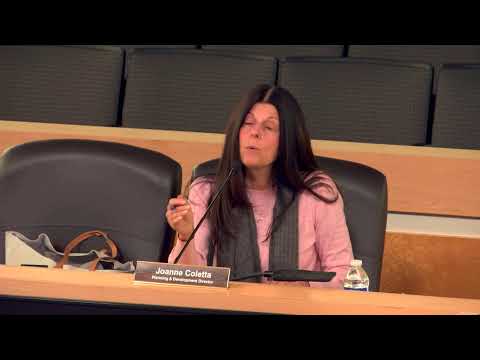
Planning and Development Director Coletta told the Corona City Planning and Housing Commission that the city must amend Chapter 17.85 of the Corona Municipal Code to comply with state law on accessory dwelling units (ADUs).
The commission voted to forward ZTA 2024-0004 — a zone text amendment to Title 17 — to City Council for consideration. Commissioner Alexander moved to approve the amendment and Commissioner Sequin seconded; the motion passed.
Coletta said the changes respond to legislation that took effect Jan. 1 and listed the primary revisions the city must adopt. The amendment adds a definition of “livable space,” clarifying that an ADU must include space used for living, cooking, sleeping and sanitation. The draft also increases the number of detached ADUs allowed on parcels with existing multifamily development from two to eight, but only up to the number of existing multifamily dwelling units on the property; for parcels with proposed multifamily development the draft allows no more than two detached ADUs.
The amendment would also make clear that uncovered parking spaces converted or demolished to accommodate an ADU do not need to be replaced; Coletta said, “This law now specifies that this also includes uncovered parking.” The draft requires local jurisdictions to provide a pathway for previously constructed ADUs built before Jan. 1, 2020, to come into conformance, while retaining the city’s ability to refuse permits where a unit would remain substandard.
Commissioners asked detailed questions about likely local impacts. One commissioner raised the example of Parkwood Apartments and asked whether a multi‑building complex on a single parcel could add eight ADUs and noted the potential loss of parking for existing residents. Commissioners discussed limits on ADU size — Coletta said ADUs cannot exceed 1,200 square feet, attached ADUs are limited to no more than 50% of the primary unit, and jurisdictions must allow ADUs up to at least 800 square feet — and the requirement that an ADU include cooking facilities to be considered a separate dwelling. Commissioners also noted that demolition of covered parking or garages was already treated in the existing ordinance and that the state change extends that treatment to uncovered spaces.
Coletta described how the city would address existing, unpermitted ADUs: property owners who have received notices from code compliance would be asked to obtain permits and bring units up to minimum standards; the city is not required to proactively locate previously unpermitted ADUs and typically learns of them through complaints or inspections. Coletta said, “We are not here to permit a substandard unit. We're here to permit a unit that's gonna meet all the minimum qualifications.”
Commissioners expressed concern about parking loss, tenant demand and contractual obligations between tenants and property owners if assigned parking is removed; Coletta noted those are civil matters for property managers and owners to resolve.
The commission’s action forwards the amendment to the City Council for final consideration.