Get Full Government Meeting Transcripts, Videos, & Alerts Forever!
Get email alerts on the Public Procurement topic
No spam. Unsubscribe anytime.
Panel approves bill to standardize bidder selection to 'lowest and best' for state and local projects
Summary
House Bill 15‑59 would align procurement code (IC 5‑32) so the same award standard—"lowest and best"—applies to higher education, state and local government projects. Supporters said it allows value judgments such as reputation and schedule; critics warned it could introduce discretion and legal uncertainty. Committee voted 12‑0 to advance the bill
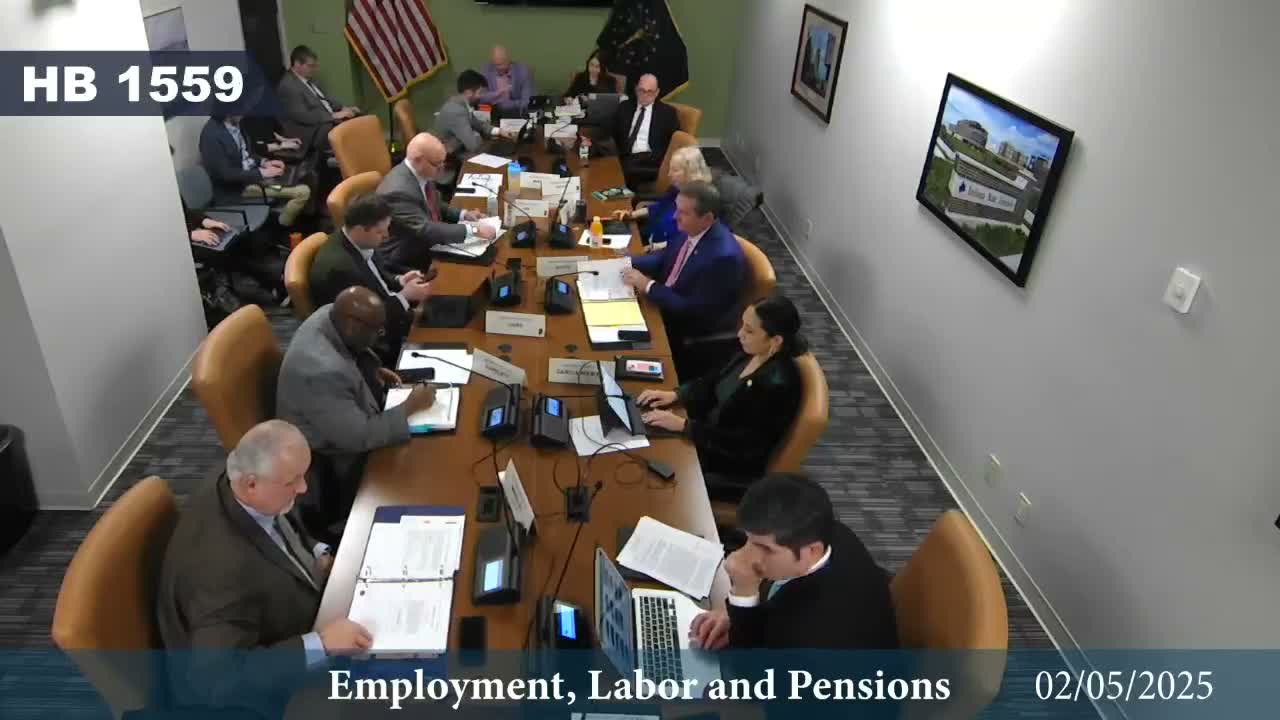
The committee considered House Bill 15‑59, described by its sponsor as a cleanup to IC 5‑32 that would create a single award standard—"lowest and best"—for higher education, state owners and local units of government. The sponsor said the change "levels the playing field" because local governments currently apply a "lowest responsive and responsible" standard while higher education and state owners use "lowest and best."
Lance Gasser, chief operating officer for Garmont Construction, supported the change and said it applies only to subcontractor awards by construction managers, not how public entities contract with construction managers. He offered an example in which a low painting bid was $70,000 below the next lowest bid but the low bid was technically nonresponsive because of a corrupted form; under a "lowest responsive and responsible" approach the owner would have to go to the second bidder, while "lowest and best" would allow the owner to validate the form and accept the low, responsive firm to save taxpayer dollars. "In that scenario, we saved $70,000 of taxpayer money because of a simple change," Gasser testified.
Kevin Tharpe of the Associated General Contractors of Indiana said his organization was officially neutral but cautioned that "lowest responsive and responsible" has been interpreted by Indiana courts and that moving to "lowest and best" can invite more discretion by owners. He said "lowest and best works well, when the owners and their construction managers are very sophisticated" but could cause confusion for local governments that lack the same expertise. Committee members questioned definitions, prequalification and how owners would apply the subjective "best" factors. Witnesses cited higher education and INDOT as examples already using "lowest and best."
The committee voted to advance the bill; the vote was recorded as 12‑0 with one member noting a desire to work with the author on remaining concerns.
Ending: Sponsors said the change aligns procurement practice across owners and allows consideration of reputation, schedule and value engineering to secure overall value; industry witnesses urged clarity and training for local owners to avoid unintended discretion.