Get Full Government Meeting Transcripts, Videos, & Alerts Forever!
Get email alerts on the Occupational Licensure Compact topic
No spam. Unsubscribe anytime.
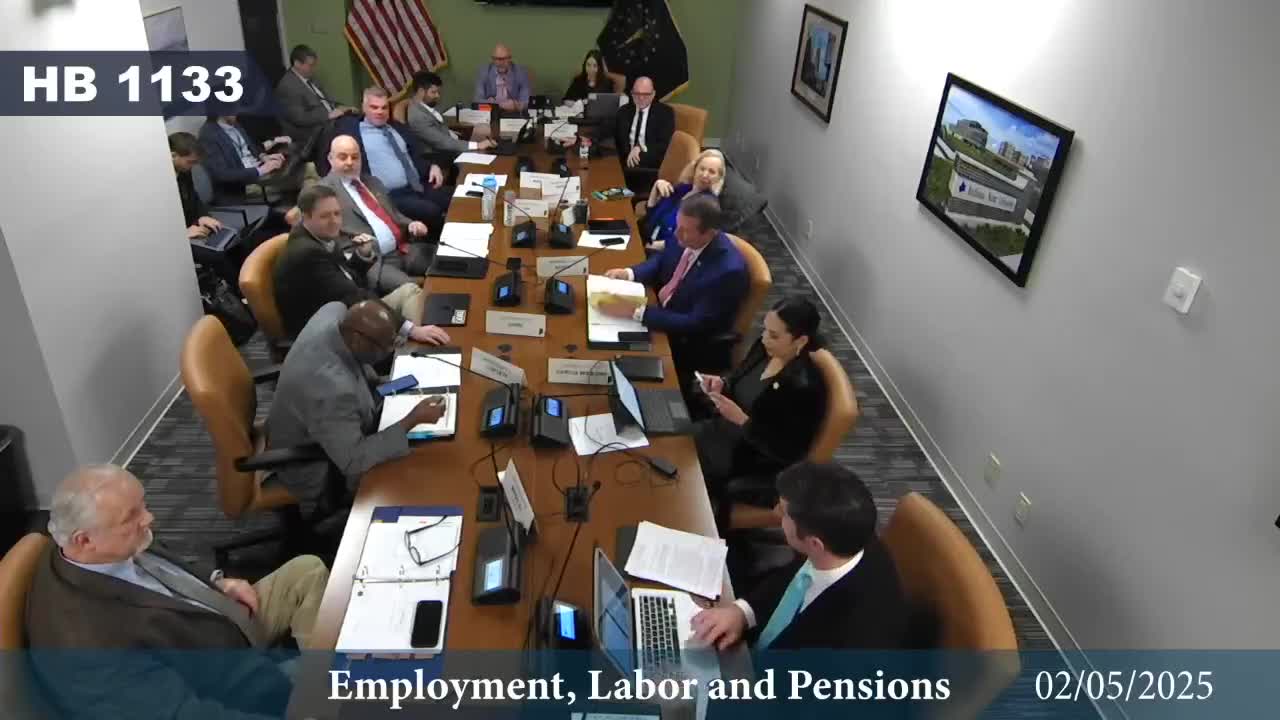
Committee advances cosmetology licensure compact, citing portability for military spouses and domestic‑violence survivors
Summary
House Bill 11‑33 would adopt the Cosmetology Licensure Compact to allow cosmetology licenses to be used across member states. Supporters said portability helps military families and victims of domestic abuse; the committee voted 10‑1 to advance the bill.
Representative Miller introduced House Bill 11‑33 to adopt the Cosmetology Licensure Compact, an interstate agreement developed with the Council of State Governments to make licensure portable across member states. Keith Buckout, a policy analyst for the Council of State Governments, described the compact as a mobility measure developed with the Department of Defense to reduce unemployment among military spouses and enable license portability. "It took us about 18 months to develop the cosmetology licensure compact," Buckout said, and he listed member states enacted to date: "Alabama, Arizona, Colorado, Kentucky, Maryland, Ohio, Tennessee, and Virginia."
Buckout said the compact preserves state sovereignty over practice acts while allowing a license issued by the home state to be used in other compact states, and that a compact commission will administer the system. Committee members asked about the number of member states, the compact's commission timeline and whether compact membership would allow a licensee from a state with fewer hours (Buckout said Virginia had recently reduced to 1,000 hours) to practice in another compact state. Buckout said the compact requires an active, unencumbered single‑state license in the home state for portability to apply.
Representative Bartlett framed the portability question in practical terms, noting military spouses and victims moving across state lines could be able to continue working immediately in the cosmetology field. Committee members broadly supported moving the bill forward; the committee recorded a 10‑to‑1 vote in favor of advancing the compact.
Ending: Supporters characterized the compact as a mobility and public‑safety measure—helping military spouses and people fleeing domestic violence maintain incomes by allowing license portability—while committee members sought clarifications about member states' hour requirements and the commission timeline.