Get Full Government Meeting Transcripts, Videos, & Alerts Forever!
Get email alerts on the Public Comment topic
No spam. Unsubscribe anytime.
Residents urge council to address bond fallout, unpaid debt, speed humps and impact fees during public comment
Summary
At the Feb. 4 call to the public, residents criticized record retention practices, urged the council to respect voters' rejection of a bond, raised concerns about outstanding debt and impact fees, and asked for traffic calming measures.
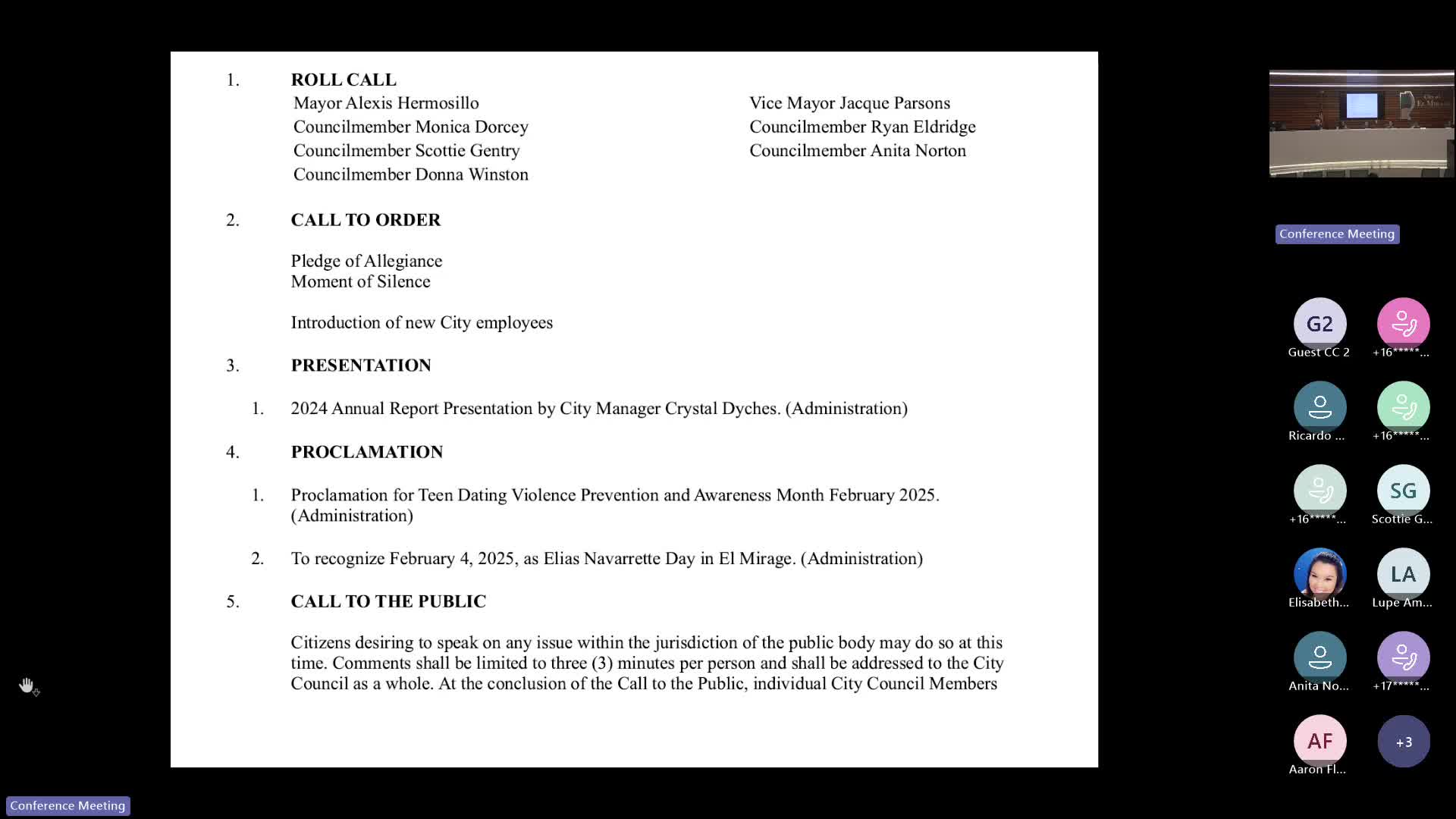
During the Feb. 4 call to the public, several El Mirage residents addressed the council on a range of concerns including meeting record retention, last year's failed bond, existing city debt, impact fees and neighborhood traffic speeds.
Philip Bynum said he was alarmed by a previous discussion about destroying meeting notes and argued those records are part of local history. "Let the record stand," he told the council. He also pushed back on comments he said were critical of residents who voted against a bond, saying voters understood the ballot was a tax for projects and expected their votes to be respected.
Jeff Locke said he believed the city still owed "between 18 and 26 million" on previous bonds and urged the council to consider paying down debt instead of moving forward with special projects. He also urged the council to revisit impact fees and to move forward on neighborhood speed humps, saying he observed excessive speeds on Barney Avenue.
Jim McPheeters said he opposed council members traveling to Washington, D.C., calling such trips a "boondoggle" and arguing the money should be spent locally. He also urged prudence in spending pandemic-related federal money and voiced support for speed humps, saying one life is worth installing traffic calming.
Terry Porter, speaking from the virtual line, said she voted against the 2023 bond because she did not want the city to fund what she described as Scottsdale-style infrastructure and said she would prefer investment in community activities rather than additional city office space.
The council listened; members and staff did not take formal action on the public comments during the meeting. Several speakers referenced future elections and urged voters to hold elected officials accountable.