Get Full Government Meeting Transcripts, Videos, & Alerts Forever!
Get email alerts on the Enrollment Forecast topic
No spam. Unsubscribe anytime.
ITRE demographers: Davidson County growth likely to add students; elementary enrollment to lead 10-year increase
Summary
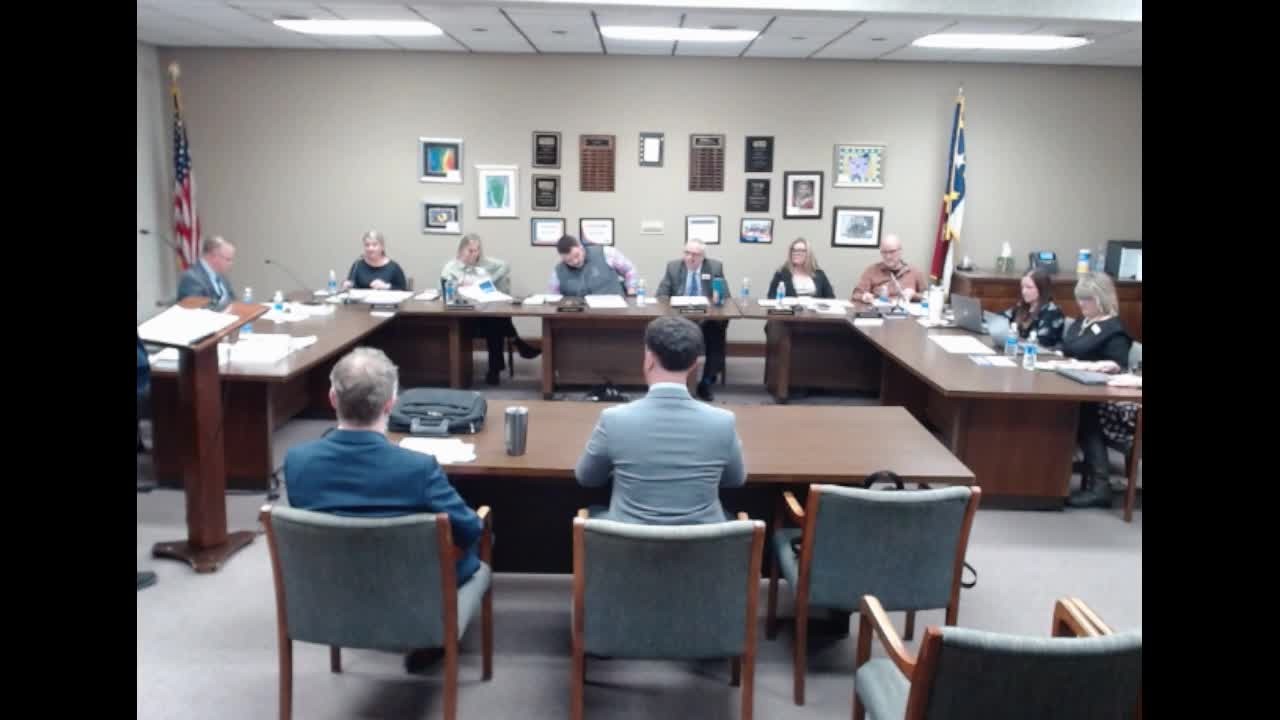
Thomas Dudley and Brian Godfrey, school planners with the Institute for Transportation Research and Education at NC State, presented a land-use study and 10-year membership forecast showing countywide residential growth and an anticipated rise in district enrollment led by elementary grades.
Thomas Dudley and Brian Godfrey, school planners with the Institute for Transportation Research and Education (ITRE) at NC State University, told the Davidson County Board of Education that population growth across Davidson County is expected to increase student membership over the next 10 years, with the largest near-term increases at the elementary level.
The consultants presented a land-use study and a 10-year membership forecast meant to inform school facility planning. "A foundational element of our work is the land use study," Brian Godfrey said, explaining the study compiles on-the-ground information about where residential development is proposed and when it is likely to be built. Thomas Dudley added the forecast incorporates that development inventory, recent birth data and the district 's membership history.
The study found roughly 44 residential developments that are either proposed or approved but not yet built, representing about 3,100 dwelling units. Godfrey described the study process for converting new lots into expected students: "We use . . . student generation rates . . . you can expect say 0.3, 0.35 students per lot." Using those student-generation rates, the consultants said the pending developments could yield on the order of 1,000 students across grade levels as they build out.
The membership forecast the consultants showed projects growth across elementary, middle and high school levels, with the elementary grades leading the rise. Dudley said the district has seen an elementary decline during COVID and "then since then . . . recovery and stability," and that the forecasted growth is driven by young families moving into the district. The consultants displayed school-level "out-of-capacity" tables that match projected membership by school to the district-provided capacity figures; a color legend flagged schools projected to exceed design capacity.
Board members asked technical and policy questions about how the forecast treats mobile units (pods) and existing, partially built subdivisions. Dudley said the district-provided school capacities used in the out-of-capacity analysis do not count trailers or pods: "We're not accounting trailers and pods in that." When asked how the 3,100 units translate to students, Godfrey reiterated the approach of matching new developments to observed proxy developments and applying student-generation rates.
The consultants described the geographic dispersion of growth across Davidson County, noting development activity around Thomasville, Lexington and High Point as well as in historic communities and lake areas. They also noted economic drivers, including recent industrial and commercial projects and a county-marketed mega site off U.S. 64 that has been rezoned for large-scale industrial use.
Board members and staff pressed the consultants on utilization thresholds. Dudley and Godfrey referenced a commonly used operational rule of thumb: maintaining utilization under roughly 95 percent to manage classroom variability. "That 95% is probably about as close as you could reasonably manage a lot of the time," Dudley said when asked where capacity becomes a problem.
Discussion during and after the presentation raised capacity-related concerns tied to non-classroom spaces and temporary buildings. Board members described strain on cafeterias and gymnasiums at schools already functioning near capacity and asked whether pods are a long-term solution; an operations staff member told the board that mobile units have been used historically but are not a long-term answer.
The consultants' land-use inventory and school-level forecasts will be used by the district for facility planning and for updating the capital improvement plan. The board did not take formal action at the meeting; the presentation concluded with the consultants answering questions and the board thanking them.