Get Full Government Meeting Transcripts, Videos, & Alerts Forever!
Get email alerts on the Board Of Appeals topic
No spam. Unsubscribe anytime.
Chesapeake Beach council flags Board of Appeals eligibility clause for after long-running case
Summary
Council discussed a provision in the Board of Appeals rules that can render members ineligible for missing a single meeting, and agreed to postpone changes until the currently ongoing case concludes. Council noted the requirement is unusual and not retroactive, and the chair plans to avoid meetings if quorum would be compromised.
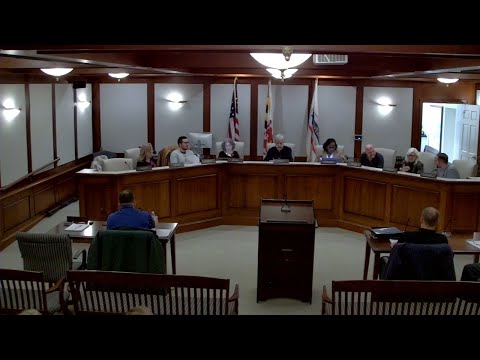
At the Feb. 18 Chesapeake Beach Town Council meeting, councilmembers debated whether the town should change a provision in the Board of Appeals’ governing documents that can render a member ineligible to vote if they miss a single meeting.
A councilmember who asked to add the Board of Appeals matter to the agenda said the clause had prevented two board members who had served many months from voting in a long, complex case and called the outcome “summarily unfair.” The councilmember said the Board of Appeals’ proceedings had extended unusually long — 13 meetings and more than 35 hours of testimony — and suggested allowing a member who missed a meeting to watch a recording and then participate.
Town attorney Fred Sussman (referenced by council) is reported to have said that the requirement is unusual. Councilmembers agreed that changing the language during an active, long‑running case would not be appropriate because revisions would not apply retroactively and thus would not resolve the immediate situation. The chair of the Board of Appeals, Jody Hoontar (as referenced), told council members he planned to avoid holding meetings if attendance was insufficient so that the present case would not be decided without members who had heard prior testimony.
Council discussion produced this short‑term approach: do not hold meetings when attendance would trigger the disqualification clause and revisit possible charter or bylaw changes after the case concludes. Several councilmembers signaled support for revising the rule at that later date; one councilmember noted that any change would not be retroactive and would not help the current case.
Councilmember Kathleen (last name not specified) asked why the change could not be made retroactive; council members said that was the advice of counsel and that retroactivity was not available. The council did not take a formal vote on an amendment at the meeting; instead, members agreed to move the topic to unfinished business and to address it after the Board of Appeals case concludes.