Get Full Government Meeting Transcripts, Videos, & Alerts Forever!
Get email alerts on the Corporate Tax Cut topic
No spam. Unsubscribe anytime.
Delegate Hartman urges phased cut in Maryland corporate income tax to boost competitiveness; opponents question timing amid budget shortfall
Summary
Delegate Wayne Hartman pressed for a multi‑year corporate income tax reduction under HB1101, arguing a lower rate would make Maryland more competitive with neighboring states and attract jobs.
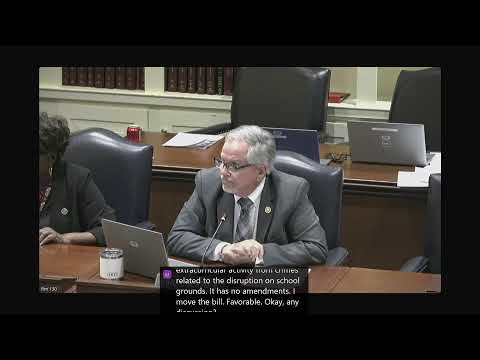
Delegate Wayne Hartman presented House Bill 1101, titled the Economic Competitiveness Act of 2025, to the Ways and Means Committee on Feb. 20. Hartman described the bill as a multi‑year reduction in Maryland’s corporate tax rate, reducing it from 8.25 percent over five taxable years down toward 6.25 percent (a phased approach outlined by the sponsor).
Hartman framed his proposal as a response to Maryland’s unfavorable business rankings and to competitive pressure from neighboring states such as Virginia and Pennsylvania. He cited several business‑climate rankings (American Legislative Exchange Council, Tax Foundation) and past commissions recommending a lower corporate tax rate. Hartman told the committee that reducing the corporate rate would make the state more attractive to new employers, stimulate investment, support job growth and “send a message” to the private sector that Maryland is trying to be business friendly.
Members probed the timing and magnitude of the proposal. Delegate Buckle asked how the state’s higher corporate tax rate squares with neighboring states that have large surpluses; Hartman said Maryland’s economic performance has lagged and that tax cuts are one element of a broader competitiveness strategy. Members observed that tax changes take years to influence private sector investment and asked about the governor’s alternative proposals. Hartman acknowledged the governor has proposed a smaller, later cut but said his bill was intended to move state policy sooner and more decisively.
Committee discussion emphasized tradeoffs between near‑term fiscal needs and long‑run competitiveness. Several delegates asked about the fiscal note and whether predicted revenue reductions might be offset by future growth. Hartman defended the proposal on grounds that a lower corporate rate would expand the business tax base long‑term and help attract private investment in a period when federal job losses were a risk.
No formal vote on HB1101 was recorded in the hearing transcript. Hartman asked the committee for a favorable report.
Why it matters: The bill would reduce Maryland’s corporate tax rate in a multi‑year trajectory and is part of a larger debate about whether tax cuts or other policies do more to attract business. The hearing highlighted the tension between near‑term budget constraints and long‑term economic competitiveness strategies.
Speakers quoted in this writeup were limited to committee members and the bill sponsor as recorded in the transcript.