Get Full Government Meeting Transcripts, Videos, & Alerts Forever!
Get email alerts on the Income Tax Tips topic
No spam. Unsubscribe anytime.
Delegate Fisher pitches 'No Income Taxes on Tips' bill, sparking debate on equity and administrative questions
Summary
Delegate Mark Fisher introduced House Bill 1005, a proposal to exclude tips from Maryland taxable income, telling the Ways and Means Committee the change would help students, single parents and service workers while making restaurant employment easier to staff.
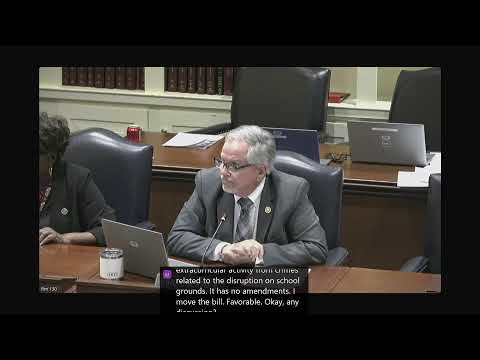
Delegate Mark Fisher (R‑Calvert) presented House Bill 1005, the “No Income Taxes on Tips Act,” at the February 20 Ways and Means Committee hearing, asking members for a favorable report.
Fisher said HB1005 would create a subtraction modification for tips and gratuities so that tips would not be included in taxable income for Maryland income tax purposes. Fisher framed the bill as targeted relief for students, single parents, retirees and part‑time workers who rely on tipped jobs to make ends meet. He said the policy also benefits restaurants by making tipped jobs easier to staff and said most tips are already traceable because many customers pay by credit card.
At the hearing delegates asked how the change would interact with federal rules and with other workers who do not receive tips. Delegate Jason Buckel (D) and others questioned whether excluding tips from tax would create a “winner/loser” effect — favoring families whose income comes from tips over those who work comparable hours in non‑tipped professions, such as certified nursing assistants, retail staff, or office administrators. Buckel gave examples of two sisters he said might earn similar household income but face different tax treatment.
Fisher responded that the bill treats tips as a private transaction between customer and worker and argued government should not be “in the middle,” and that addressing the underlying tax burden on low‑ and middle‑income households more broadly would also be necessary. He said the bill limits the industries that could use the change and that staff had discussed issues such as whether tips could be treated like gifts.
Delegate Hornberger, Delegate Wells and others asked whether Maryland should simply wait to see if the federal government changes law in ways that would make state action unnecessary or require state/federal coordination. Hornberger suggested drafting the bill so Maryland would decouple or match federal changes automatically if Congress acts.
Wells, who said she is married to a service‑industry worker and is familiar with tipping mechanics, pressed whether the measure would assist workers immediately or whether administrative features of tax filing (e.g., annual reporting) would blunt its benefit. Fisher argued that workers who receive cash tips now often have immediate access to cash; excluding tips on tax returns would reduce or eliminate a later tax liability and so provide a tangible benefit.
Public testimony for the bill was limited to the sponsor’s presentation and committee questions. Fisher said he had spoken with stakeholders and named some restaurant owners he knows; he also criticized a letter from the Maryland Society of Accounting and Tax Professionals in his testimony.
No committee vote on HB1005 was recorded in the hearing transcript. The committee hearing record closed after questions. Fisher asked for a favorable report.
Why it matters: The bill would change how a common form of low‑ and middle‑income household compensation is taxed and could alter recruiting and compensation incentives in the hospitality and gig economies. Opponents highlighted equity concerns for non‑tipped workers and uncertainty about federal/state interaction; supporters emphasized immediate financial relief to workers with irregular schedules.
What’s next: The sponsor asked for a favorable report. The hearing transcript includes extended questions about equity, federal‑state alignment and administrative practicality that bill drafters may need to address in subsequent drafting and in fiscal analysis.
Speakers quoted or cited in this article appear in committee testimony and public record for the hearing; summaries above are limited to statements captured in the committee transcript.