Get Full Government Meeting Transcripts, Videos, & Alerts Forever!
Get email alerts on the School Operations Weather topic
No spam. Unsubscribe anytime.
Forest Hills superintendent outlines how ‘snowmageddon’ decisions are made, warns calendar changes possible
Summary
Superintendent Larry Hook described the district—s multi-factor process for declaring delays or cancellations after a major recent snow event, and warned the board that extended closures could require calendar or staffing adjustments.
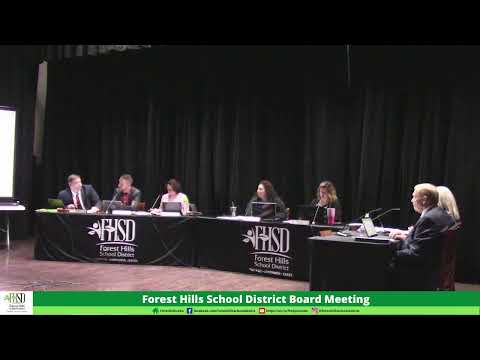
Superintendent Larry Hook told the Forest Hills School District Board of Education on Jan. 20 that decisions to delay or cancel school during major winter storms are made rapidly each event morning and rely on multiple data sources and local partners. He described the process after the recent multi-day storm the district labeled "snowmageddon."
Hook said the district—s priority is in-person instruction but safety drives decisions. "We wanna have school," he said, before describing how transportation, maintenance and operations staff, and local township crews assess parking lots and roads starting in the early morning hours. Hook said staff check the National Weather Service, local radar and weather apps, text other superintendents and then decide typically between about 5:15 a.m. and 5:30 a.m. whether to delay or cancel.
The superintendent described operational constraints that shaped the district—s response to last month—s storm: heavy snowfall that required rental equipment, drifting, melting that refroze as sheet ice at some sites, and limits on what plows can do in deep drifts. He praised maintenance, transportation and township partners for clearing lots and restoring safe conditions.
Hook also explained how wind chill factors into decisions and that many districts use a negative-20-degree wind-chill threshold as a rule of thumb because of frostbite risk. He said the district monitors wind chill charts and considers sustained gusts as part of that assessment. Hook added the district will add a text-notification channel to its mass-notification system and named Josh Bazan (communications coordinator) as the contact for families who did not receive messages.
On makeup days, Hook told the board the state migrated from "calamity days" to an hour-based system, and Forest Hills typically can absorb several days without altering the calendar. "By and large, we used that as a rule of thumb, but, truly, we could probably go 7 to 8 days if we had to," he said, noting the most acute scheduling pressure is for half-day kindergarten and contractual calendar language with staff. He said administrators would consider options such as extending kindergarten days, using remote instruction ("remote things") or adding days at the end of the year, and that any final plan must balance state hour requirements and negotiated contract language.
Board members asked clarifying questions about blizzard bags (materials for remote instruction) and the feasibility of providing meals to families dependent on school meals during extended closures. Hook and other administrators said the district does not run universal meal distribution during a severe weather shutdown because essential staff are needed to clear facilities and some community distribution partners may be closed; individual schools work with local food pantries on an as-needed basis. Hook noted that pandemic-era distribution models relied on funding sources (ESSER) that are no longer available.
Why it matters: The superintendent—s description gives the public a clearer view of the operational, safety and contractual constraints that shape weather decisions and highlights tradeoffs the district will face if more winter closures occur.
Ending: The board did not take action on policy around snow days at the meeting but asked administration to return with scheduling implications if additional days are needed later in the year.