Get Full Government Meeting Transcripts, Videos, & Alerts Forever!
Get email alerts on the Public Works topic
No spam. Unsubscribe anytime.
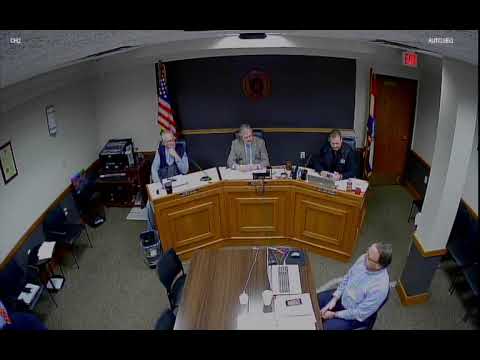
Cole County budget talks center on public‑works salaries, facility upgrades and access control funding
Summary
County budget workshop focused on pay raises for public‑works staff, equipment and facility needs for the highway maintenance complex, and where to fund a new access‑control system and spreader‑stand paving.
Cole County commissioners and staff spent the bulk of a budget workshop reviewing public‑works and road & bridge needs, emphasizing starting pay for equipment operators and mechanics, purchases to outfit mechanics with tool chests, and capital work at the highway maintenance facility including space for new spreader stands and an access‑control (gate and software) system.
The discussion narrowed on two funding questions: whether to pay one‑time capital costs from the county's capital improvements (sales tax) fund or from the road & bridge operating fund, and how much to set aside in a countywide salary reserve for market adjustments. Staff presented specific line items for the road & bridge budget (concrete and spreader‑stand supports, $90,000; additional concrete on the lower lot, about $50,000; a $27,000 estimate to outfit the facility with access‑control hardware). Commissioners discussed moving some of those one‑time costs to the capital improvements fund while leaving ongoing licensing and maintenance in the operating fund.
Why it matters: road & bridge operations depend on certified operators and experienced mechanics to run heavy equipment and to respond in emergencies such as snow removal. Staff warned that low starting wages and recent turnover threaten retention of experienced operators, creating longer training periods and safety concerns.
Most substantive budget items and staffing proposals were discussed in concrete terms rather than finalized. Public‑works staff proposed raising starting pay for equipment operators to about $38,000 and for mechanics to about $48,000 to stay competitive with nearby employers (city and state comparators were cited). Staff said those changes, plus the auditor's recommended cost‑of‑living adjustment (2.2 percent) and a $500 per‑employee supplement, would leave an additional internal gap of roughly $81,000–$82,000 for the road & bridge group; commissioners discussed placing that gap in a GR/ACRM reserve for HR to evaluate against market data.
On capital and operations: staff asked the board to accept a $150,000 placeholder for highway facility improvements (upper lot concrete and related work) and to add roughly $27,000 next year to implement access control for the maintenance facility. Commissioners expressed a preference to charge one‑time capital purchase (hardware and pavement for spreader stands) to the capital improvements sales tax fund and to keep recurring maintenance and licensing costs (software subscriptions, annual fees) in the road & bridge operating fund. Staff and commissioners also discussed engraving and securing county‑owned tool chests to reduce stipend payments once chests are purchased for mechanics.
Energy and fuel projections were reviewed: staff reported lower fuel costs compared with this year and recommended reducing fuel expense estimates accordingly, noting diesel usage still dominates vehicle fleets. Staff said they used the U.S. Department of Energy outlook for energy prices when estimating next year's fuel budget and cautioned that these are projections and can vary month to month. Commissioners and staff discussed the phased gas‑tax increases (a multi‑year 2.5¢ per gallon increase was referenced) and the complexity of County Aid Road Trust distributions, which depend on assessed valuation and a statutorily defined formula.
Funding sources and accounting questions recurred. Commissioners asked staff to clarify which accounts would cover the gate hardware, the access‑control software and ongoing licensing, and which projects should remain in the 85/15 road & bridge split. Staff indicated they will move the one‑time hardware and concrete costs to capital improvements (sales tax) where appropriate and leave annual licensing and maintenance in the operating fund.
On staffing and retention: road & bridge leadership said turnover has been high—about half of current staff joined within the last five years—and that recent hires have left for higher pay elsewhere, sometimes soon after the county paid to train them (for example, CDL costs). Staff recommended recruiting and retention steps including raising starting wages, advertising for a building inspector position (a $52,000 salary was in the draft schedule), and continuing training such as playground‑inspection certification for parks staff. Commissioners expressed support for creating a centralized salary reserve so Human Resources can vet market adjustments consistently across departments rather than the commission picking individual adjustments ad hoc.
Next steps and process notes: commissioners directed staff to refine the budget figures, to bring back a consolidated salary schedule and a proposed GR/ACRM reserve amount for market adjustments, and to confirm which capital costs should be moved to the capital improvements fund versus operating funds. The commission set procedural deadlines for making the draft budget available for public review before the Jan. 7 public hearing and flagged timing constraints tied to payroll and benefits decisions.
Ending: No final appropriation votes occurred at the workshop. Board members moved to adjourn after completing the department reviews and to reconvene as needed to finalize the budget and any salary adjustments.