Get Full Government Meeting Transcripts, Videos, & Alerts Forever!
Get email alerts on the Community Corrections Funding And Staffing topic
No spam. Unsubscribe anytime.
Polk County officials say staffing and funding shortfalls are straining community corrections and juvenile services
Summary
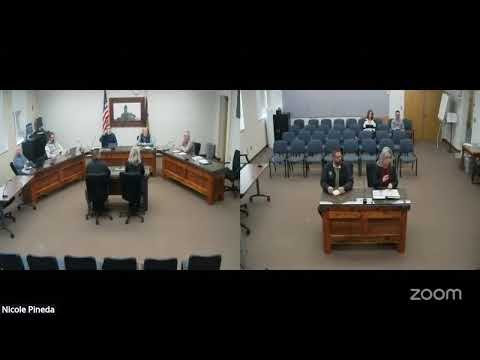
Polk County officials told the Board of Commissioners on Feb. 11 that shortages of probation officers and limited juvenile mental-health resources are stretching local community corrections and that county leaders are pushing the state for higher per-person funding.
Polk County officials told the Board of Commissioners on Feb. 11 that shortages of probation officers and limited juvenile mental-health resources are stretching local community corrections and that county leaders are pushing the state for higher per-person funding.
A department presenter identified in the meeting as a staff member in community corrections said the adult parole and probation unit is "not fully staffed. We are down 1 PO position, and we have 1 PO that is just on the tail end of his training." She said the office is building a caseload for that officer and expects to reach full capacity only after six to eight months of training and monitoring.
"Our caseload sizes are up in the 60s," she said. "Ideally, we would like those in the 40s." She told commissioners the higher caseloads have forced the office to adopt condition-based supervision and prioritize measurable contacts that respond to higher-risk behaviors.
The presenter described a funding shortfall that county corrections are taking to the 2025 legislative session. She said the associationconducting the cost study has proposed $18.18 per person, contrasted with the current biennial funding level of $13.83; the Department of Corrections agency-recommended budget increases that figure to about $15.09, and the governors budget references the cost study and would move funding closer to $16 per person.
"Our association is still asking for that because that is the baseline funding cost in order for us to actually do the job that we're asked to do," the staff member said. She added that while the governor's recommendation would allow the office to "survive," it would not return caseloads to the office's preferred levels or remove the need to alter some supervision practices.
The presenter said Polk County's office prefers in-person contacts and face-to-face supervision: "The state has given an opportunity to do a contact as email, telephone, video ... That does not qualify in our office. We want face to face, in the field, in the office, with treatment, at employment if appropriate." She said telephone or video contacts are used as incentives for compliant individuals but are not the norm.
Commissioners and county staff discussed local budget implications. A county staff member asked whether the county had been supplementing community corrections from the general fund; the reply was that historically there has not been consistent supplementation over a 10-year average, though recent years had some supplements. The county staff member explained how different funding levels would affect the two-year (biennial) budget cycle: at lower funding the general fund would likely supplement costs in year two; at higher funding the department could see a surplus in year one and be roughly balanced in year two.
Commissioners also pressed juvenile services staff about trends and resources. The juvenile unit reported averaging about 26 referrals a month and said most are resolved at the lowest level. Staff raised concerns about increasing mental-health acuity among youth and limited inpatient psychiatric placements for children. The presenter said some requests to place youth in detention for mental-health crises had been refused, noting that detention is not an appropriate response to a psychiatric crisis and that the county has a limited number of detention beds.
The juvenile presenter also flagged a rise in firearm-related incidents among youths and said recent cases were detained until commitments to the Oregon Youth Authority could be arranged. The county contracts juvenile beds through Yamhill Youth Services and said the number of contracted beds is generally appropriate but occasionally exceeded.
District Attorney Aaron Feltman spoke later in the meeting about statewide concerns over public defense capacity and prosecutor shortages that have drawn media attention. He said data presented by the Oregon Judicial Department shows Polk County currently has no unrepresented defendants on the OJD dashboard he cited, and he credited local collaboration among law enforcement, defense firms and the courts.
"Polk County had no unrepresented defendants," Feltman said, noting that OJD's dashboard and other metrics place Polk favorably compared with many counties experiencing shortages. He warned, however, that the statewide picture remains unsettled and that the legislature is considering where responsibility and standards for defense capacity should sit.
Feltman also noted Polk County's recent public-safety levy and local salary improvements for deputy district attorneys as contributors to the county's relative stability. He said recruitment and retention challenges for both prosecutors and defense attorneys are part of a wider workforce pipeline issue that affects many professions.
No formal votes or agenda actions were taken on items discussed at the Feb. 11 meeting. Commissioners and staff said they plan to continue legislative advocacy for higher funding levels for community corrections and to coordinate across county departments and the courts on juvenile mental-health and detention issues.
(At the meeting, speakers identified themselves by role rather than all by full name. Quotations are attributed to the speaker role as recorded in the transcript.)
Ending: Commissioners indicated they will monitor funding outcomes during the legislative session and follow up with staff and partner agencies on juvenile mental-health resources and detention capacity.