Get Full Government Meeting Transcripts, Videos, & Alerts Forever!
Get email alerts on the Public Funding Events topic
No spam. Unsubscribe anytime.
Committee passes bill restricting use of state funds for sexually explicit events after removing explicit 'drag queen' text
Summary
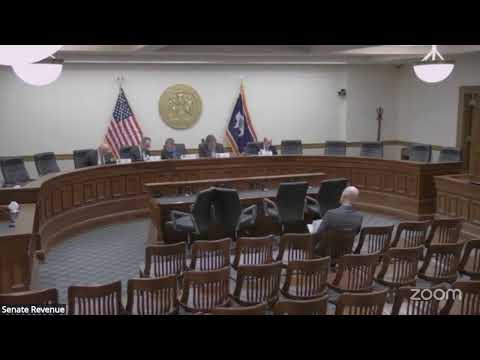
House Bill 134, which would prohibit use of state or federal funds for events deemed sexually explicit, passed the Senate Revenue Committee 3–2 after members removed draft language explicitly naming "drag queen events" and debated the bill's scope for university, college and judicial activities.
The Senate Revenue Committee narrowly advanced House Bill 134, a measure that prohibits taxpayer-funded state or federal dollars from being used to sponsor events the bill characterizes as sexually explicit; the committee adopted an amendment removing a line that had explicitly listed "drag queen events" and ultimately approved the bill 3–2.
The sponsor (recorded in committee transcript as the bill's representative) told the committee the bill "ensures that taxpayer money is not used to support events that some may find inappropriate or offensive" and described a recent local controversy over a drag show where public-health testing and private fundraising intersected. Early draft language included an explicit example, but after questions from the committee the sponsor agreed with an amendment to delete the provision that read "explicit events shall include drag queen events." The committee adopted that deletion.
Public comment and institutional witnesses raised concerns about how broadly the bill could reach public institutions and routine public-health, theater or court activities. Sarah Burlingame, executive director of Wyoming Equality, testified in opposition and warned the bill's definition of "explicit" is broad: she said it could sweep in non-sexual theater or routine public-health testing at community events, and that the single example in the sponsor's testimony had been misconstrued in public discussion. Mike Smith of the University of Wyoming and Erin Taylor of the Wyoming Association of Community College Trustees both expressed concern that including facilities or equipment or unpaid volunteer activity could prevent campus programming and that university campuses routinely host content some will find objectionable while protecting free-speech principles.
Committee amendment attempts and debate: Senator Hyde proposed an amendment to limit the prohibition to paid personnel and to remove facilities or equipment from the ban (so that volunteer or unsanctioned student activity might not be caught). That amendment failed on a recorded voice vote. Earlier, the committee approved an amendment to delete the explicit reference to "drag queen events." Supporters of the bill argued it is about funding choices: "I don't want my hard earned money going to pay for this event," Senator French said in the debate. Opponents called the measure overbroad and cautioned about unintended consequences for theater, student clubs, public-health testing and court functions.
Action and next steps: The committee recorded a roll-call vote on the amended bill: Senators French, Eyde and Chairman McEwen voted aye; Senators Case and Pappas voted no. The committee reported House Bill 134 as amended to the next legislative stage.
Votes at a glance
- House Bill 134 (taxpayer funds for sexually explicit events prohibited), as amended (deleting example referencing "drag queen events"): moved by Senator Hyde, seconded by Senator French; committee outcome: passed, 3 aye, 2 no.
Sources and provenance
This article is based on the bill sponsor's presentation, public-comment testimony from advocacy and campus witnesses, committee amendment attempts, and the roll-call vote recorded in committee minutes.