Get Full Government Meeting Transcripts, Videos, & Alerts Forever!
Get email alerts on the Debanking topic
No spam. Unsubscribe anytime.
Senate GOP member presses Fed Chair Powell to act on debanking, accountability after SVB
Summary
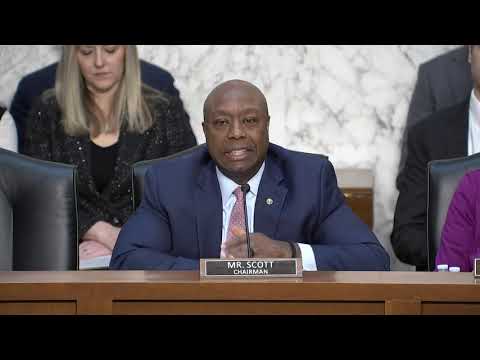
A Republican member of the U.S. Senate Banking Committee pressed Federal Reserve Chair Jerome H. Powell on the committee's priority of ending "debanking" and on accountability for supervisory failures tied to the collapse of Silicon Valley Bank.
A Republican member of the U.S. Senate Banking Committee pressed Federal Reserve Chair Jerome H. Powell on the committee's priority of ending "debanking" and on accountability for supervisory failures tied to the collapse of Silicon Valley Bank.
The senator asked Powell to "commit to working with this committee to end debanking, including working with the new vice chair of supervision once appointed to revise the federal reserve supervision manuals to remove reputational risk as a tool to weigh in on political topics." Jerome H. Powell, Chair of the Federal Reserve, responded: "I'm happy to make that commitment. Thank you, sir."
Why it matters: Committee members said debanking—banks declining to serve lawful customers or industries—has broad consequences for businesses and consumers. The senator described debanking as a bipartisan concern and tied it to supervisory practices that, he said, use "reputational risk" as a lever to encourage or discourage the banking of legal industries. Powell's willingness to "take a fresh look" signals potential policy review at the Fed, but the exchange did not produce any formal rule changes or binding commitments.
On accountability for supervision, the senator challenged Powell about whether Fed employees are held to the same standards as private-sector managers after the failure of Silicon Valley Bank. The senator said regulators had not been held accountable and noted the FDIC has begun holding SVB executives accountable. "Please explain to me why Fed employees are held to a different standard... And what are you planning to do to take accountability for Fed failures in supervision?" the senator asked.
Powell said the Fed had "done quite a lot" in response to SVB-related events and characterized the breakdown as the result of a playbook that failed rather than clear malfeasance or nonfeasance by individual employees. "What happened was, I would say, a lot of focus on process and on governance and controls and not enough focus on basic bread and butter banking, credit risk, liquidity risk, interest rate risk," Powell said, adding the Fed took "very substantial steps to avoid further spread of those issues." He acknowledged the senator's point on accountability while defending the treatment of Fed staff given the circumstances described.
The senator also pressed Powell on regulatory costs for smaller banks, saying community and regional bank leaders describe the regulatory framework as "oppressive" and that larger banks "suggest that the cost per employee for the regulatory framework is $10,000 per employee." Powell committed to working with the senator on avoiding "excessive burden" and said it was "time to take a fresh look" at debanking and related regulatory effects.
No formal votes, directives, or changes to supervisory manuals were announced during the exchange. The senator asked that any revisions include work with the incoming vice chair for supervision once that official is appointed; Powell's remarks signaled openness to review but did not specify a timeline or concrete procedural steps.
The discussion combined three related themes: calls to end debanking practices that may exclude lawful customers; demands for accountability for supervisory lapses tied to Silicon Valley Bank's failure; and requests to tailor regulation so community and regional banks face less cost per employee. Committee-watchers will likely look for follow-up hearings or staff work to determine whether the Fed will revise supervisory guidance or remove references to reputational risk in practice.