Get Full Government Meeting Transcripts, Videos, & Alerts Forever!
Get email alerts on the Taxation Oil Pipelines topic
No spam. Unsubscribe anytime.
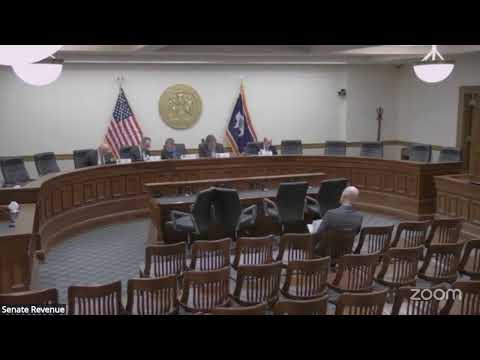
Senate Revenue Committee OKs sales-tax exemption for oil gathering-line power with amendment
Summary
The Senate Revenue Committee voted 4–1 to advance House Bill 311, restoring a sales-tax exemption for electricity used in oil gathering lines and adding a clarifying word to preserve existing pipeline exemptions; the Department of Revenue warned litigation over earlier language is pending and the change would take effect July 1, 2025.
The Senate Revenue Committee on an apparent voice-and-roll call vote advanced House Bill 311 on a 4–1 tally, clearing language to restore a sales-tax exemption for electricity used to move oil through surface gathering lines and inserting a clarifying word to preserve existing exemptions for major pipelines.
At issue is whether the longstanding exemption that applied to interstate and intrastate transmission pipelines should also apply to smaller gathering lines that transport crude from well sites to larger collection or delivery points. Representative Wach, the bill sponsor, told the committee the bill "just brings it back for the gathering lines" after a prior statutory interpretation and subsequent rulemaking removed that treatment.
The bill would amend the sales-tax exemption in W.S. 39-15-105 to add a pipeline definition and a phrase clarifying coverage "regardless of the ownership of the transportation of the transported tangible personal property." Brenda Henson, director of the Department of Revenue, said the department had previously administered the exemption for railroads and pipelines and that House Bill 197 (effective July 1, 2024) changed statutory language; the department later adopted rules that defined "pipeline" to exclude gathering systems. She warned that "the question of going back to that original language of engaged in the transportation business is currently before the Wyoming Supreme Court." Henson also said if the legislature adopts the change, "we will administer it accordingly" and noted the sponsor-specified effective date of July 1, 2025.
Supporters said the bill clarifies legislative intent and corrects an uneven application of tax treatment across producers. Pete Obermueller, president of the Patrol Association of Wyoming, described the policy question succinctly: "Should that sales tax exemption go from wellhead all the way to the end point of pipelines in Wyoming?" He said one major taxpayer successfully appealed to the State Board of Equalization and that adopting the bill would prevent inconsistent outcomes from audits and appeals. Contractors and industry commenters noted companies can hire third parties to meter and allocate electrical use between extraction and transport where needed.
Opponents and some committee members raised equity and policy questions. Senator Pappas questioned whether expanding the exemption was the appropriate response to differences among producers, saying pumping costs and gathering-line expenses are part of the cost of production and that the legislature should consider whether exemptions are warranted. Committee discussion included a single-word amendment proposed by an industry speaker to insert "delivery" after "sales," intended to ensure coverage extends to the delivery point and does not unintentionally remove exemptions for major interstate pipelines. That amendment was moved, seconded, and adopted by the committee before final passage.
Action and next steps: Senator Hyde moved the committee to advance the bill; Senator French seconded. The roll call recorded Senator Case as voting no and Senators French, Eyde, Pappas and Chairman McEwen voting aye. The Department of Revenue told the committee the change would be effective July 1, 2025, and the department noted ongoing litigation about the meaning of "engaged in the transportation business." If enacted, affected taxpayers would need to document power used specifically for gathering-line transport to qualify for the exemption, a process several speakers said is typically done by third-party metering and allocation.
Votes at a glance
- House Bill 311 (exemption for transported fuel and power sales), as amended (inserting "delivery"): moved by Sen. Hyde, seconded by Sen. French; committee outcome: passed, 4 aye, 1 no. Effective date stated by testimony: July 1, 2025.
Sources and provenance
This article draws on the committee’s opening presentation of House Bill 311 and questions and testimony through the committee’s roll call. Key transcript excerpts include the sponsor’s explanation that "this bill just brings it back for the gathering lines" (Representative Wach) and the Department of Revenue’s statement that the bill "would be in effect 07/01/2025" (Brenda Henson).