Get Full Government Meeting Transcripts, Videos, & Alerts Forever!
Get email alerts on the Nightlife Office Funding topic
No spam. Unsubscribe anytime.
Nightlife advocates urge larger budget, permanent director for Mayor’s Office of Nightlife and Culture
Summary
Industry and hospitality representatives told the Council’s Committee on Business and Economic Development that the Mayor’s Office of Nightlife and Culture needs more staff, a permanent director and stronger interagency authority to support DC’s nighttime economy.
Chairperson Kenyan R. McDuffie opened public testimony on the Mayor’s Office of Nightlife and Culture (MONC) during the Committee on Business and Economic Development’s oversight hearing, and industry leaders urged the council to increase the office’s budget, fill a vacant director post and strengthen its authority with other agencies.
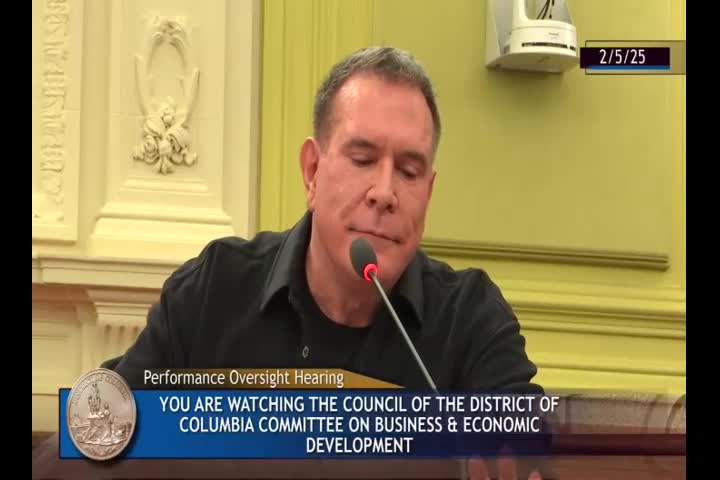
John Guggenmose, chair of the DC Nightlife Council, told the committee Monday that the office is “underfunded and understaffed” and urged a budget increase to support economic growth and outreach. He said MONC’s 2019 budget was $344,000 and that, despite an 11% increase last year, staff remain too few to meet industry needs. “It just doesn't have the resources to proactively support any fostering improvement in economic development,” Guggenmose said.
The nut graf: Witnesses argued that MONC serves as a critical intermediary between nightlife businesses and city agencies, but that a lack of staff and, at times, a vacant director's post limit its ability to coordinate permitting, marketing and multiagency problem-solving the industry needs.
Sean Townsend, president and CEO of the Restaurant Association of Metropolitan Washington and the city’s first nightlife director, said the office “has demonstrated an unwavering commitment” but also recommended additional resources so the office can scale programming and outreach. Townsend noted MONC’s role in producing the streetery program during the COVID pandemic, saying it was “a lifeline for many restaurants.”
Gene Holmes (testified under the name given in the public record) and other neighborhood hospitality operators urged the council to make the acting director role permanent; Holmes specifically recommended Salima Khalid, saying she already “knows the job and can help the office meet its full potential.” Witnesses also said MONC should be placed under the Deputy Mayor for Planning and Economic Development to improve agency coordination, a structural change some witnesses said would help integrate nightlife into broader economic development plans.
Panelists who testified in support of the office asked the council to fund a director position, add at least one additional staffer and permit the office to attend national summits and trainings. Witnesses cited broader models — such as New York’s placement of nightlife functions under small-business or economic development offices — as examples to study.
Committee members said they heard “consistent” praise for MONC’s outreach but agreed more resources are needed. McDuffie said he would press the administration on staffing and consider the budget requests during upcoming deliberations.
Ending: MONC is a relatively new office that industry witnesses said has delivered tangible benefits but requires more staff, a permanent director and stronger formal ties to planning and economic development to carry out a proactive strategy for DC’s nighttime economy. The council plans continued oversight and expects the agency to appear in budget hearings with concrete staffing and performance requests.