Get Full Government Meeting Transcripts, Videos, & Alerts Forever!
Get email alerts on the Humanitarian Access topic
No spam. Unsubscribe anytime.
ICRC says access to civilians in Gaza depends on agreement and support of warring parties
Summary
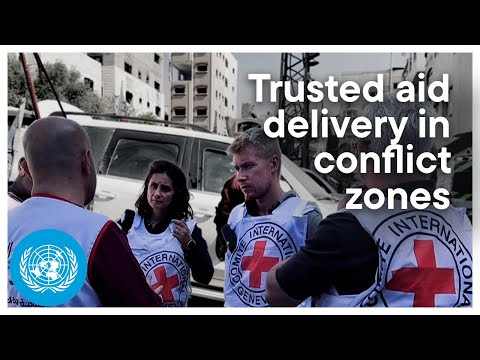
A representative of the International Committee of the Red Cross told a briefing that humanitarian access to civilians in Gaza requires the agreement and active support of the warring parties, and that the ICRC relies on longstanding, confidential dialogue with both Israel and Hamas.
A representative of the International Committee of the Red Cross said humanitarian access to civilians trapped in Gaza depends on the agreement and active support of the warring parties and on longstanding neutrality and trust established by the organization.
"Everywhere you see people deprived of their basic human dignity, you consider it a moral failure of the international community because we haven't succeeded in providing the necessary support to these people that are innocently trapped in situations of armed violence," the ICRC representative said. "It's our core responsibility to do our best to reach these people, but we also need the agreement and the active support of the warring parties to allow us to access these trapped civilians wherever they are."
The representative said the ICRC has been present in the region, including Gaza, for many decades and has maintained confidential dialogues "both with the authorities of Israel and with Hamas for many, many years." The representative added that this longstanding access is a basis for the ICRC's role in supporting ceasefire implementation and efforts to secure the release and return of hostages and detainees.
On the ICRC's operating posture, the representative said the organization is unarmed and depends on trust and security guarantees it receives from parties to conflicts. "We are non armed. We are not specifically protected other than by the trust that we receive from both sides and the security guarantees that we receive on both sides based on many, many years of working as a neutral intermediary and never taking sides in a conflict," the representative said.
The ICRC speaker said the organization addresses violations of international humanitarian law directly and confidentially with the party concerned rather than by public disclosure. "We don't disclose this information in public, and this has, for many, many decades, allowed the ICRC both to uphold the dialogue with over 200 armed groups, but also with all the governments in the world," the representative said.
No formal actions or votes were recorded in the transcript of the briefing. The remarks described the ICRC's operational approach and limitations but did not specify any new programs, dates, or funding commitments.