Get Full Government Meeting Transcripts, Videos, & Alerts Forever!
Get email alerts on the Criminal Justice topic
No spam. Unsubscribe anytime.
Koochiching County treatment court team and graduates describe two-decade program, point to lower recidivism
Summary
At the Jan. 28 Koochiching County Board meeting, Judge Shimon and treatment court staff reviewed the drug- and treatment-court model, presented local outcomes and introduced graduates who described personal recovery and employment gains.
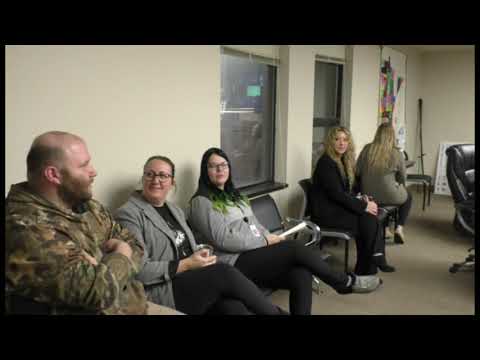
Judge Shimon, who runs Koochiching County's treatment court, presented an overview of the program and its local outcomes at the county board meeting on Jan. 28, 2024, and introduced members of the treatment court team and program graduates.
Shimon said the court was founded in 2005 and this year will mark its 20th anniversary. He called the work "very important" and said, "running a treatment court is the best part of my job by far." He described the court as a five-phase, team-based program that combines high-intensity supervision, clinical care and wraparound services from partners including Rainy River Recovery, Northland Counseling and JET.
The judge and staff told the board the county's treatment court recidivism rate is about 29 percent; they cited a 32 percent rate for Minnesota treatment courts and a 35 percent national treatment-court recidivism figure (sources noted by staff). Shimon said typical graduation without major setbacks takes about 18 months but that most participants average closer to 22'4 months.
Two program graduates spoke to the board about their recovery. Steven Wasco said, "I have 2 years and 21 days sober, and drug drug court changed my life." He described completing educational goals and gaining stability through the program. Katie Ness, introduced as a treatment-court graduate and a certified peer recovery specialist now working with Northland Counseling, recounted entering treatment after criminal charges and said, "Today, I am just over 3 years clean and sober and living my best life." Both speakers and program staff emphasized that treatment court focuses on changing "people, places and things" that contribute to relapse, and that mental-health services, employment support and peer recovery work are key components.
Board members and other meeting attendees praised the program and its volunteers. A local employer attending the meeting described hiring a treatment-court participant and said the worker became a reliable employee.
No formal board action was taken on the presentation; several commissioners expressed support and invited the public to attend open treatment-court sessions.
Ending: The presentation closed with invitations to commissioners and the public to observe court sessions; program leaders said details of the 20th anniversary celebration will be shared later this year.