Get Full Government Meeting Transcripts, Videos, & Alerts Forever!
Get email alerts on the State Budget topic
No spam. Unsubscribe anytime.
Georgia House passes $811 million Hurricane relief and $40.5 billion amended FY2025 budget
Summary
The Georgia House on Feb. 6 approved House Bill 67, an amended fiscal 2025 budget that includes $811 million for Hurricane Helene relief and multiple one-time and capital investments across transportation, water, schools and corrections. The bill passed 166–3 and was transmitted to the state Senate.
The Georgia House of Representatives voted 166–3 on Feb. 6 to approve House Bill 67, an amended fiscal 2025 budget that the chairman said is “set by a revenue estimate of $40,500,000,000 in state funds” and includes a package of disaster relief, infrastructure and public-safety investments.
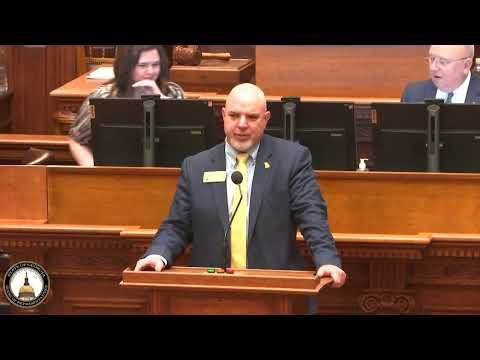
The House’s supplemental appropriations bill directs what Chairman Hatchett described as a mix of surplus-driven and midyear revenue funding that adds resources for Hurricane Helene recovery, local infrastructure, school security, foster-care services and corrections. “Funding recovery efforts and providing aid to communities across the state that are still reeling from the storm is a top priority of mine,” Hatchett said while presenting the bill.
Hatchett told members the budget incorporates about $2.7 billion in surplus funds on top of the revenue estimate. Major allocations in the House bill include: $811 million for Hurricane Helene relief and recovery (the House package adds $197 million above the governor’s recommendation), $250 million in new funds for GIFA to support low-interest loans for water and wastewater infrastructure, $500 million for coastal surface water development, and more than $500 million in new Georgia Department of Transportation funding for interstate and freight corridor projects. The House proposal also adds $37.5 million to the Georgia Transportation Infrastructure Bank, $7.5 million in airport aid and $5 million for rail.
On public-safety and corrections, Hatchett said the House included an infusion of $333 million in new funds to the Department of Corrections, “slightly less than the governor’s proposal,” and redirected some spending to hire more staff, increase equipment and improve monitoring. The House version raises the annual staff hiring target above the governor’s 330 positions to more than 400 positions, and adds equipment purchases including 740 body cameras and 500 tasers. The bill also provides $7 million for an overwatch and logistics unit, funding for advanced intelligence and forensic tools to combat contraband, and $2.6 million for cost-of-living adjustments affecting private-prison employees.
Hatchett said the budget increases support for schools and children. The House added $50 million in school-security grants (to be combined with an existing base appropriation), $3 million for start-up costs of a statewide school threat assessment system, $22 million for foster-care growth and utilization, and $1.7 million for a special victims unit to support exploited foster children.
On agriculture and disaster aid, the House expanded the governor’s proposal. Hatchett said the bill provides a total of $250 million for farmer and producer relief—an additional $150 million beyond the governor’s initial allocation—split as $100 million to the Forestry Commission for cleanup and $150 million in loans through the Georgia Development Authority to meet strong demand from applicants.
The bill includes $145 million to an emergency fund for initial cleanup and relief, $5 million to initiate Next Generation 9-1-1, and $298 million to the Department of Transportation to backfill motor-fuel tax holiday revenue and address infrastructure rehab, sign replacement and debris cleanup. The House also set aside $35 million in one-time funds for hospital stabilization and $10 million for continuing relief through the One Georgia Authority. Hatchett said the bill includes an allocation of $225 million to the Department of Administrative Services to address current liability and property claims, including damage to state buildings from Hurricane Helene.
Members questioned specifics during floor debate. Minority Leader Hughley asked about the modular correctional housing the department proposed; Hatchett described those units as factory-built, “very sturdy” structures with an expected life of 20 to 30 years and locks meeting the same specifications used in state facilities. Representative Meeks and others asked whether the agriculture funds recognize the scale of industry losses; Hatchett and other supporters said the House package expands relief to match the level of applications and need. Representative Bruce Williamson and other members congratulated the appropriations team for balancing new capital spending—Hatchett pointed to cash-funded projects and avoided new state debt.
After debate, Hatchett moved that House Bill 67 do pass by committee substitute; the motion was seconded by Chairman Bill Hitchens. The House resolved into a committee of the whole for consideration, returned the bill with a favorable recommendation, and then passed the bill on final passage by a roll call: yays 166, nays 3. Chairman Hatchett immediately moved that the bill be transmitted to the Senate; the motion was ordered.
The House’s summary of large figures in the bill included the state revenue estimate of $40.5 billion, and the addition of $2.7 billion in surplus funds. The appropriations package uses that combined capacity to target recovery and capital needs now while funding other programmatic increases.
The bill will now be considered by the Georgia Senate. The House record shows the passage vote and immediate transmittal; the transcript does not record any subsequent Senate action or final signature by the governor.
What this means locally: the bill directs one-time and capital money for local water systems, road projects, flood and hurricane cleanup, and hospital stabilization. It also increases funding aimed at reducing staffing shortages and equipment gaps in correctional facilities, and provides new targeted spending for foster-care needs and school safety.
A full text of House Bill 67 and line-item details will be available from the General Assembly’s fiscal offices and the House Budget and Research Office; the House presentation and debate serve as the official floor-recorded account of the allocations and intent reflected in the House version of the supplemental budget.