Get Full Government Meeting Transcripts, Videos, & Alerts Forever!
Get email alerts on the Zoning Land Use topic
No spam. Unsubscribe anytime.
Brandon council approves three zoning changes; drive‑throughs now require conditional‑use review
Summary
The council passed second readings of ordinances 07/18 (institutional signage), 07/19 (drive‑through regulations) and 07/20 (fence rules in drainage easements). Planners said the conditional‑use process allows case‑by‑case review of stacking, noise and safety concerns; existing drive‑throughs remain nonconforming.
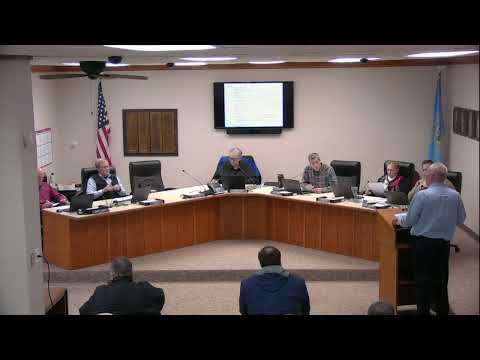
The Brandon City Council approved second readings of three zoning ordinances affecting institutional signage, drive‑through facilities and fence rules in drainage easements.
Ordinance 07/18 modifies how allowable signage is calculated in institutional districts (schools, churches, city buildings and similar uses), allowing larger buildings proportionally more sign area. Planning staff said the change is intended to align signage allowances with building size; the ordinance passed on second reading.
Ordinance 07/19 establishes regulations for drive‑through facilities. The ordinance requires new drive‑throughs in commercial districts to obtain a conditional‑use permit (CUP) and sets a default stacking‑space recommendation of three spaces, with planning and zoning authority empowered to increase or reduce that number during CUP review. Planning and zoning members said the CUP process lets staff evaluate each proposal for traffic stacking, sound buffers near residences, kiosk and teller noise, and other safety factors rather than applying one blanket standard.
"You know, we we approach it with a pretty common sense approach," Brian Heidbrink, a member of the Planning and Zoning Commission, told the council. Heidbrink said the commission’s aim was to avoid an overly conservative rule while preserving safety and neighborhood protections. Alyssa Tealey, also of the Planning and Zoning Commission, said the commission held public meetings and a hearing on the proposal and received no public opposition during that process.
Planning staff confirmed that existing drive‑through facilities will be classified as nonconforming under the new rules but will not be forced to change unless they alter their site. The ordinance passed on second reading.
Ordinance 07/20 removes a blanket prohibition on fences in drainage easements wider than 20 feet, responding to requests from the city engineer and recognizing that some fences cross or run through easements for functional reasons. That ordinance also passed on second reading.
Council members asked whether the CUP requirement would deter national retailers; planning staff said the conditional‑use timeline is typically 10–30 days depending on public‑notice requirements and that the commission considered alternatives (such as a prescriptive table) before recommending the CUP approach. Council members noted that the ordinance can be revisited if it unduly limits development.
All three ordinances were approved on second reading during the meeting.