Get Full Government Meeting Transcripts, Videos, & Alerts Forever!
Get email alerts on the Infrastructure Water Sewer topic
No spam. Unsubscribe anytime.
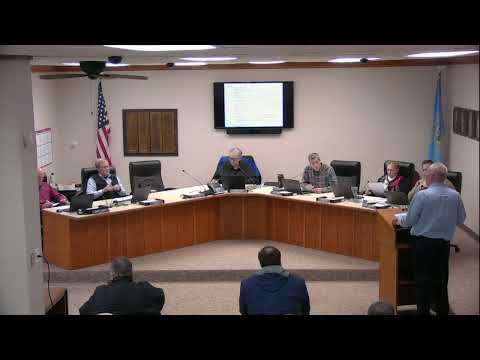
HDR briefed Brandon council on force‑main cost overruns; firm will absorb one redesign cost
Summary
HDR engineer Bill Moran told the Brandon City Council that four construction issues increased costs on the jointly‑bid Brandon and Sioux Falls force‑main work. HDR/HR Green agreed to absorb the redesign cost for a deeper installation; the council expressed concern about a cathodic protection omission that added roughly $58,000 to Brandon's tab.
Bill Moran, an engineer with HDR and the project designer of record, told the Brandon City Council that the combined Brandon and Sioux Falls force‑main work was bid together at about $20,000,000 and that Brandon’s portion of the project was “just under $3,000,000.”
Moran said four issues discovered after bidding produced significant cost adjustments: a missing table in the bid documents describing the extent of cathodic protection anodes (which HDR estimated would add just under $58,000 to Brandon’s cost), an increase in casing size at a Burlington Northern railroad crossing (raising costs by roughly $76,000), relocation of about 300 feet of an existing Brandon force main uncovered during excavation, and a redesign to place a segment of pipe deeper than originally shown.
The deeper redesign — described by Moran as the last‑minute change tied to coordination with the wastewater facility design — had an estimated cost that HDR/HR Green agreed to pay and not pass on to the cities. “We decided that HDR HR Green would pay for that and that that cost would not be passed on to the city of Brandon and the city of Sioux Falls,” Moran said.
Council members pressed for detail on the cathodic protection cost. Moran said the cathodic protection had been included in the force‑main bid item but that a table describing the required anodes was omitted from the drawings and was not identified until after bids and shop drawings were reviewed. Moran said staff negotiated a change‑order price with the contractor based on contractor material and labor prices and comparable items on a nearby project. “We think it’s a fair price,” he said, while noting the final amount could not be known exactly ahead of bidding.
Several council members said they were uncomfortable accepting responsibility for the cathodic protection cost, arguing the omission should have been caught in design review. One council member said they would not support that particular change order. Moran acknowledged the omission and apologized, saying HDR sought to participate in covering overall impacts and had offered to absorb the redesign cost as one remedy.
Moran also said site conditions at the railroad required upsizing the temporary or permanent casing to allow rock extraction and complete the bore, and that geotechnical borings had not revealed the size or quantity of cobbles encountered in the field.
Council members asked whether additional change orders were likely; Moran said the project had passed the most difficult construction portions — the railroad and river crossings — and he did not anticipate further major change orders.
The update was presented as information; no formal action or vote on change orders for Brandon was recorded in the meeting transcript.
The council asked for improved documentation of buried utilities going forward; Moran said new installations will be located by GIS or GPS so future records will be available.