Get Full Government Meeting Transcripts, Videos, & Alerts Forever!
Get email alerts on the Signs Public Right Of Way topic
No spam. Unsubscribe anytime.
City staff seeks rewrite of sign ordinance; committee favors keeping sidewalks clear
Summary
City staff presented proposed changes to the sign ordinance intended to make the law constitutionally defensible and easier to enforce. Committee members largely favored prohibiting signs in the walkable public right-of-way, suggested limited allowance of staked signs in parkway areas, and raised enforcement and equity concerns.
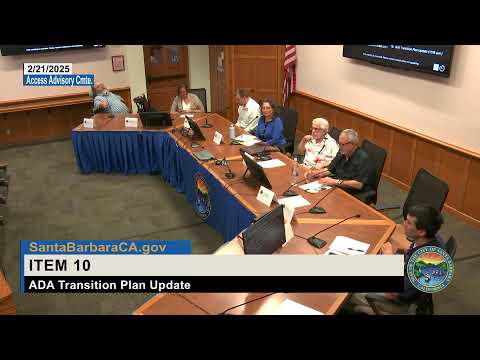
City staff presented a rewrite of the municipal sign ordinance intended to remove content-based exceptions and update enforcement practices, sparking a lengthy discussion among the Santa Barbara Access Advisory Committee about pedestrian access and enforcement.
The proposed ordinance would remove existing content-based exceptions — including the current allowance for real-estate signs in the public right-of-way — and instead regulate signs by time, place and manner, city staff attorney John Doymus said. “If you have to read the sign to see if an exception applies, that’s when you’re in trouble,” Doymus told the committee, citing the U.S. Supreme Court decision that rescinded content-based sign exceptions.
Committee members said pedestrian access should take priority. Several members urged the city to prohibit portable “A-frame” or sandwich-board signs from sidewalks and other walkable areas, while allowing lower-profile, staked corrugated signs placed in landscaped parkways that are not part of the pedestrian path.
Member Coontz and others described a practical difference between the two sign types: corrugated plastic signs staked into planting strips typically stay out of the pedestrian path, while A-frame signs “take up a lot of real estate” on sidewalks and can block curb ramps, push-button crosswalk controls and blind paths of travel.
Several committee members pushed back on proposals to allow signs on weekends only, calling that a poor compromise that would effectively exclude people with disabilities from downtown on weekends. “That was my comment as well,” one member said. “Why weekends? Where does that make sense ... that it’s critical that we don’t let signage impede the flow of foot traffic or wheelchairs?”
City staff said the initial draft had proposed no privately placed signs in the public right-of-way. The draft was later changed after outreach and pressure from business and real-estate groups, Doymus said; he told the committee the city attorney’s office originally recommended a complete prohibition because that is clearest to enforce.
Members also raised enforcement concerns. Multiple speakers noted that the current code already bans A-frame signs on sidewalks but that enforcement has been inconsistent. “The real problem is there’s no enforcement,” one member said. Staff acknowledged enforcement is a challenge and said a constitutionally sound ordinance is the first step toward enforceability.
The committee indicated a preference for: (1) prohibiting signs in the walkable public right-of-way, (2) permitting low-profile staked signs in non-walkable parkway areas with clear definitions and outreach, and (3) pursuing stronger enforcement and public education. Staff said they will continue outreach and return with revised language and enforcement proposals for further review.
The committee also asked staff to clarify definitions of parkway/parkway infill and to include outreach to community groups to reduce unintentional violations. A member of the public and several committee members recommended a community education campaign to inform small businesses and volunteers that sidewalk placement of signs can be illegal and dangerous for people with disabilities.
Staff presentation materials and an initial draft spreadsheet of proposed code changes were provided to the committee for follow-up and were described by staff as the basis for upcoming public outreach and Council-level review.