Get Full Government Meeting Transcripts, Videos, & Alerts Forever!
Get email alerts on the Local Infrastructure And Public Safety topic
No spam. Unsubscribe anytime.
Council to test-open Riverstone Crossing gate; members raise concern over rising animal-control costs
Summary
Council agreed to draft a resolution to open the Riverstone Crossing gate for a trial period and discussed mounting costs tied to animal hoarding cases and a fire department vehicle purchase reported in the claims discussion.
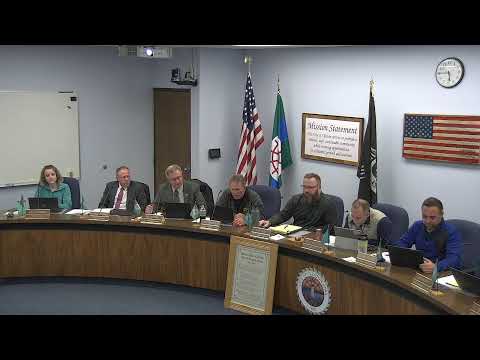
The Clinton City Council discussed two community issues at its Dec. 10 meeting: reopening the Riverstone Crossing gated segment on a trial basis, and growing municipal costs tied to animal hoarding responses identified in the claims discussion.
Riverstone Crossing gate Council member Kearns and other members revisited earlier disputes over a gate on Riverstone Crossing. Following public correspondence from resident Bill Wolford and staff reports of drivers bypassing the gate (creating ruts), councilors proposed a temporary reopening to gather public feedback.
Council member Kearns said the road is a public thoroughfare and argued for reopening: “It's funded with taxpayer dollars from every citizen of Clinton, and my internal instinct tells me it should be open like every other public road in town.” The council agreed to prepare a resolution to open the gate for a three-month trial period, advertise that change, and return for a follow-up discussion after the trial. Staff indicated the matter will be placed on the next available meeting agenda (the first meeting in January was discussed as a likely slot) so residents can offer comment.
Animal-control and claims discussion During the claims portion of the meeting, councilors and staff raised concerns about rising municipal costs related to animal hoarding cases handled by the local Humane Society. A recent case was described as costing about $33,000 so far; councilors said the city already pays $100,000 annually to the Humane Society under the existing arrangement and noted that some prior years had additional expenses approaching $75,000 above that baseline.
Council discussion flagged the services the city is paying for, and whether some of the ongoing hoarding expenses should be covered inside the existing contract or treated as separate billable incidents. One council member said: “we had another hoarding situation, and it's at 30, 33,000 out for them right now. And we're not done with that.” Councilors requested staff track these cases and return with options to limit open-ended liability, including discussing caps or decision processes for cases that may require euthanasia — a sensitive policy choice acknowledged by the council.
Fire department vehicle purchase noted in claims The fire chief presented a claims entry about purchasing a secondary command vehicle (a Tahoe) and explained it will allow the department two command vehicles for large-scale incidents and to provide redundancy. The chief said the purchase was funded with donations obtained through a grant process and that, after grant accounting, “it actually only netted the fire department $2,639.30.” Councilors discussed the invoice structure and upfitting the vehicle (lights, sirens and a command center in the rear) and noted that the listed vehicle price appeared low compared with typical market prices.
Next steps - Staff to draft a resolution opening the Riverstone Crossing gate for a three-month trial, publicize the trial and return to council for a follow-up hearing. - Staff was asked to track and report cumulative animal-control/hoarding-related costs and explore options—including limits or different billing arrangements with the Humane Society—to reduce the city's exposure in future incidents.
Why it matters The gate decision affects resident access and public-right-of-way policy; the animal-control discussion signals potential future budgeting or contract negotiations affecting how the city manages and pays for large animal welfare cases.