Get Full Government Meeting Transcripts, Videos, & Alerts Forever!
Get email alerts on the City Budget Finance topic
No spam. Unsubscribe anytime.
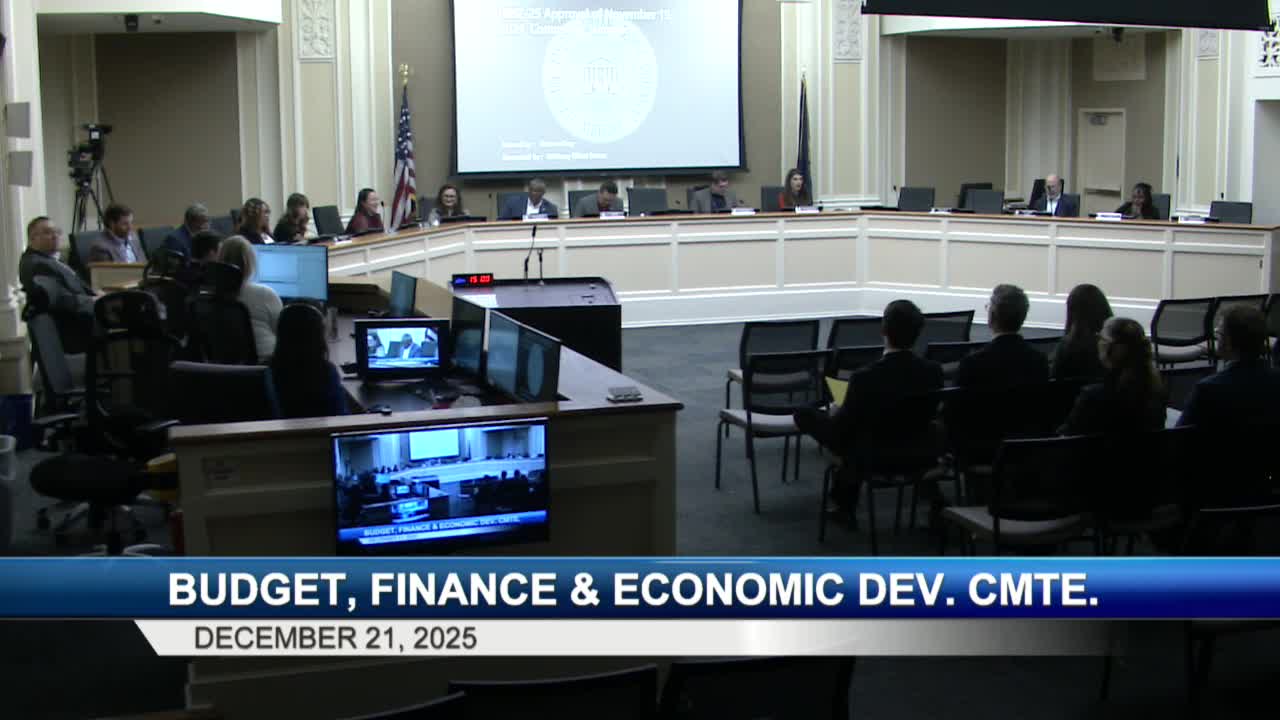
Lexington City committee hears Q2 FY2025 financial update and receives clean audit opinion
Summary
The Budget, Finance and Economic Development Committee of Lexington City heard its second-quarter financial update, covering results through Dec. 31, 2024, and received a report from new external auditors Crossland that produced an unmodified opinion on the city—s annual comprehensive financial report.
The Budget, Finance and Economic Development Committee of Lexington City heard its second-quarter financial update, covering results through Dec. 31, 2024, and received a report from new external auditors Crossland that produced an unmodified opinion on the city—s annual comprehensive financial report.
Committee members were told revenues and expenses are tracking close to the adopted budget for FY2025, with the quarter—s results described as "proceeding as we had planned." Commissioner Hensley, presenting the report, said personnel spending is a primary focus and is "within 1% of budget." Director Holbrook said payroll withholding, the city—s largest revenue source, is "running well to budget," and that net-profits tax collections typically spike in March–May with an April 15 filing deadline; Holbrook noted the city typically collects about $30,000,000 in April toward a roughly $60–70 million net-profits budget.
The committee heard that insurance premium tax collections are ahead of budget (roughly 6% growth), franchise-fee revenues were slightly below budget through the calendar year but could pick up with winter billing, and several smaller lines display high percentage variances because the dollar amounts are low. Holbrook highlighted processing improvements that have accelerated collections of penalties and interest. Director Luker said January is a high-volume month for payroll (three payrolls plus sick payouts and other items), which affects personnel variance reporting; Luker reiterated that personnel remains within 0.7–1.0% of budget.
Expense categories showed mixed results. Luker said operating expenditures are generally below budget so far but that encumbrances and capital spending are running earlier than expected as divisions spend to complete projects. She noted a $31,000,000 difference in transfers compared with the prior year that was due to a large FY2024 transfer to the capital fund; the FY2025 transfer was substantially smaller. The committee learned that personnel expenses are about 7% higher than the prior fiscal year and operating expenses about 26% higher, reflecting overall increased activity year over year. The committee was also told a recent budget amendment used roughly $500,000 of utility savings to purchase additional road salt.
Audit partner John Crossland of Crossland (engagement partner) presented the audit results, noting the external audit produced an unmodified opinion on the city—s annual comprehensive financial report. Crossland said the audit "went very well," described the firm—s responsibilities under GAAP and the Government Accountability Office standards, and said the city qualified as a "low risk" auditee for single-audit purposes because there were no federal-findings in the prior two years. Crossland said the firm identified major programs to be tested under uniform guidance (single audit), including the SAFER grant and the Coronavirus State and Local Fiscal Recovery Fund; work on the single-audit reports will continue and be issued separately.
Crossland presented required-audit communications, reporting no material weaknesses or significant deficiencies, no material fraud, no disagreements with management, and only immaterial audit differences related to receivables and inventories that did not require adjustment. Auditors emphasized they remain available to consult on upcoming GASB pronouncements and other accounting matters.
Committee members asked about the meaning of "low risk" and the difference between an unmodified and modified opinion; Crossland explained an unmodified opinion is the standard auditor—s report stating the financial statements are free of material misstatement. Council member Savigny asked whether the audit will be posted; staff said the audit is generally posted to the accounting web page after acceptance.
The committee did not take a formal recorded vote on accepting the audit during the portion of the transcript provided; the auditors— presentation concluded with committee discussion of next steps and how external-audit findings can inform the internal-audit program.
Ending: Committee members thanked the finance team and Crossland for the audit work and indicated staff would post the audit and follow up with internal-audit offices on technical recommendations.