Get Full Government Meeting Transcripts, Videos, & Alerts Forever!
Get email alerts on the Parks Master Plan topic
No spam. Unsubscribe anytime.
Kingsburg commission reviews parks master plan process, targets August grant deadline
Summary
The Kingsburg Community Service Commission heard a presentation from Fresno State planner Sam Langford on a parks master plan process that would use online and mail surveys, intercept surveys, GIS mapping and focus groups; the plan is intended to be ready to support California State Parks grant applications due in August.
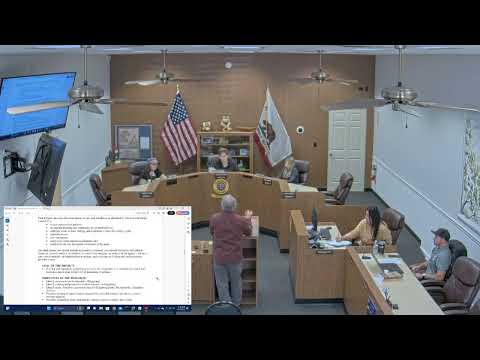
The Kingsburg Community Service Commission on Jan. 29 heard a presentation from Sam Langford, a planner at Fresno State University, on a proposed parks master plan process the city would use to inventory parks, gather community input and identify priorities ahead of grant deadlines.
Langford described a multi-step planning process his team calls SPARKY (Sustainable Park and Recreation Community Initiative) that combines an online survey, a mailed survey, one-page intercept surveys conducted in parks and at community events, a GIS-based inventory of existing facilities, and focus-group meetings with stakeholders. "We are going to do a survey in the community. We'll place that online using Qualtrics," Langford said, adding the team can also do a mail-out survey and intercept surveys staffed by students.
The commission was told the work plan Langford presented has been used in other Central Valley communities, including Kerman and McFarland Park and Recreation District, and that the goal is to complete the planning work in time to apply for state parks grant funds. "I believe in August, California parks grants are due," Langford said. "My intention here is to get this ready for you by then because you can't apply for some of those monies without a master plan." He encouraged a quick schedule to position the city for funding.
Langford outlined how survey design and analysis would inform priorities: the questionnaire will collect demographics to allow cross-tabulation by age, gender and the city's five districts; it will ask about current leisure behavior and facility use rather than only asking people to list desired amenities; and it will include programming questions if city staff want them. He recommended keeping surveys short to avoid incomplete responses, saying a mail-out should be limited to two pages, front and back, and that online surveys should be concise.
Commission members asked about community engagement, accessibility and metrics for success. Langford said the team would convene focus groups at schools, churches or community centers and work with sports organizations, youth and senior groups. He noted the plan would consider tourism-related opportunities as well as resident needs. When commissioners raised inclusive playgrounds and accessibility goals, Langford noted the city's parks staff include Michael Mahoney, who specializes in access and inclusion and can address those topics in the plan.
Langford described the technical work: the team will inventory parks and map them in GIS for city staff, identify potential park locations, and produce a prioritized list of short-term and long-term investments. Data sources he cited for shaping recommendations include the community survey, the U.S. Census and the recently completed Kingsburg general plan. He stressed that implementation will depend in part on securing funding and said one measure of success will be new funding and a timeline for construction or programming.
Commissioners and staff will review a draft survey before it is released. Langford said the firm will provide a draft and city staff, including the person identified as Adam, would review and approve the final wording. Translation into other languages is possible if the city specifies which languages are needed.
The presentation was recorded as a continued item from the commission's Jan. 22, 2022 meeting. No public comment was offered at the Jan. 29 meeting. The commission approved the meeting agenda at the start of the session and adjourned at 8:53 a.m.