Get Full Government Meeting Transcripts, Videos, & Alerts Forever!
Get email alerts on the Affordable Housing topic
No spam. Unsubscribe anytime.
New Rochelle IDA approves 15-year pilot extension for 550 Fifth Avenue affordable-housing rehab
Summary
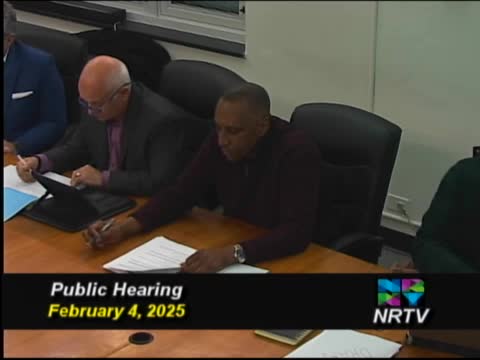
At its Feb. 4 meeting the New Rochelle Industrial Development Agency unanimously authorized a 15-year pilot extension and related tax exemptions for Parkside Place (550 Fifth Ave.), enabling roughly $7 million in unit and common-area renovations while preserving low-income rents under an existing regulatory agreement.
On Feb. 4, 2025, the New Rochelle Industrial Development Agency unanimously approved a resolution authorizing a pilot agreement, mortgage-recording-tax exemption and sales-tax exemption for 550 Fifth Avenue Owner LP, the owner of Parkside Place, an 80-unit affordable apartment complex in New Rochelle.
Parkside Place operates under a Section 42 Low-Income Housing Tax Credit (LIHTC) regulatory agreement. The developer proposes roughly $7 million in capital improvements — including HVAC, energy-efficiency upgrades, kitchens and bathrooms, and common-space work — and requested a 15-year extension of the current pilot payment schedule that otherwise expires in March 2025. The contract package also seeks exemptions from mortgage recording tax and sales tax on eligible project purchases.
Grow America financial consultant Kevin Grooms, who reviewed the applicant’s pro forma, told the board the package would support refinancing and additional equity investment needed to cover the upgrades. He summarized the IDA assistance as roughly $4.7 million in tax savings and exemptions against a total development cost of about $25 million, and said the IDA assistance would represent roughly 19% of overall development costs. Grooms said the projected first-year pilot payment under the revised agreement would be about $347,000 compared with roughly $267,000 under the most recent year, and that the tax payment would average about $2,500 per unit annually during the 15-year term. He told the board the transaction produces a projected net public benefit of about $7.8 million when accounting for taxes and other fees that flow to the city and IDA.
The board and staff noted the pilot formula would remain the same as the expiring arrangement — 10% of shelter rent — and that the requested 15-year term is shorter than the maximum the city’s Uniform Tax Exemption Policy (UTEP) allows for publicly subsidized affordable housing (up to 30 years). Grooms and staff also said the property’s regulatory agreement with New York State Homes and Community Renewal imposes rent restrictions that extend through 2062, so the affordability term will outlast the pilot extension.
Public commenters spoke during the required public hearing. Several labor and community representatives urged stronger local-hire, prevailing-wage and minority- and women-owned-business-enterprise (MWBE) requirements for projects that receive public investment. Michael Yellin, co-chair of the New Rochelle Alliance for Justice, said the board’s social-equity program should move from “shall make affirmative efforts” language to a requirement and argued the current 15% local-hire/MWBE target is “a low bar.” Richard McSpadden, a delegate to the Westchester-Putnam building trades and board member of the Westchester County IDA, urged the IDA to adopt more stringent local-hire thresholds and cited the county’s policy as a model that has produced higher local participation.
Union representatives said many New Rochelle residents remain shut out of construction jobs and asked the IDA to require prevailing wages and clearer enforcement mechanisms; Local 3 and IBEW speakers described long periods when local trades did not receive work on major developments in the region. The board acknowledged those comments and said they would inform ongoing discussions with the city council and staff, noting some larger policy changes would require coordination with the council but that the IDA can press for stronger conditions “within the margins.”
The applicant’s representative, Peter Gray, said tenants had been consulted in multiple meetings and that the project team will focus capital spending on in-unit improvements and activation of currently unused common space. Gray said the team is still finalizing the scope of green initiatives and that solar and other state programs are being explored but that the building’s age limits some measures; he said the sponsor would continue outreach on local hiring and MWBE participation.
Following the public hearing the board moved to approve the resolution authorizing the pilot extension and related tax exemptions; the motion carried unanimously. The resolution authorizes staff to finalize the pilot agreement and related documents consistent with the terms presented to the board.
The board and staff did not set additional binding labor or prevailing-wage requirements in this vote; several public speakers urged the IDA to change its policy language and enforcement practices in future approvals. The board noted those comments and said staff would continue discussions with the city council and developers and could seek further measures within the agency’s authority.
The IDA’s next meeting is scheduled for Feb. 26, 2025.