Get Full Government Meeting Transcripts, Videos, & Alerts Forever!
Get email alerts on the Public Safety Budgets topic
No spam. Unsubscribe anytime.
Council reviews fire and EMS budgets; approves intergovernmental mutual aid agreement
Summary
Cascade reviewed proposed fire and EMS budgets for fiscal year 2026 and approved an intergovernmental mutual aid agreement with Maquoketa Fire Department. Fire Chief outlined equipment, gear and staffing needs; EMS presented operating changes and noted lead time on a new rig.
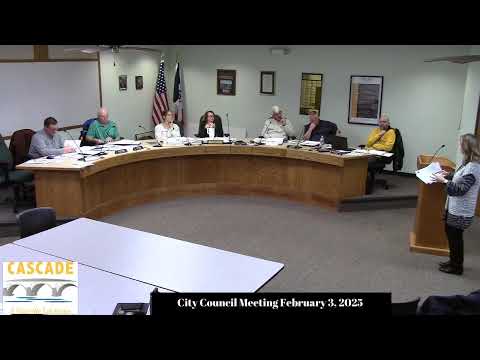
Cascade City Council held a fiscal‑year budget discussion on Feb. 3 that included detailed presentations from the fire department and Cascade Ambulance (EMS). The council also approved an intergovernmental mutual aid agreement between the Cascade and Maquoketa fire departments.
Mutual aid agreement: the council approved resolution No. 12-25 establishing a firefighters intergovernmental mutual aid agreement between the Maquoketa Fire Department and the Cascade Fire Department. The resolution passed by unanimous roll call.
Fire department budget highlights: Fire Chief Bert (presenting) reviewed department operating and capital needs, noting rising costs for utilities, insurance, and vehicle/equipment repair. The chief said the department is finishing a garage door replacement project and plans to update remaining doors. He described that a recent engine purchase was finalized last year at about $550,000, and that the department is seeking ways to stretch vehicle lifespans and plan future replacements — including considering a used tanker to replace an older unit. The chief reported the department has 29 active members and said recruitment has improved; he noted 92 calls last year with roughly half (about 50) within city limits and that mutual‑aid responses in and out of district occur regularly.
The chief provided gear costs and lifecycle concerns: a new set of turnout gear now costs roughly $3,700 per firefighter; some gear was last replaced 12–14 years ago. He said the department is pursuing a phased replacement plan and will use some donation funds for items such as boots.
EMS budget highlights: Kim (ambulance presentation) told the council the ambulance service handled about 300 calls last year and currently has nine members. Kim said payroll accounting lines were changed (paid while on calls moved into salaries), which produced an apparent increase in the salaries line relative to prior reports; the presentation also cited increased workers’ compensation and a larger facility footprint in the new building, which increases utilities and related costs.
Kim said the service is exploring options for a replacement rig but is at an early stage; consultants advised that keeping an ambulance patient box and purchasing a new chassis can be a cost‑saving approach. She also noted a typical manufacturing lead time of about one year from order to delivery for a new ambulance.
Why it matters: fire and EMS budgets affect public safety staffing, response capability and long‑term equipment readiness. Council discussion centered on planned capital spending, gear replacement schedules, staffing levels and coordination on mutual aid.
What’s next: budget figures presented will be incorporated into the city’s fiscal‑year budget discussions at upcoming council sessions. The mutual aid agreement is effective per the signed resolution and the departments will coordinate operational details under that agreement.