Get Full Government Meeting Transcripts, Videos, & Alerts Forever!
Get email alerts on the School Budget topic
No spam. Unsubscribe anytime.
Parents, teachers and residents oppose proposed elementary restructuring and cuts in Ketchikan budget options
Summary
At a Ketchikan Gateway Borough School District listening session, dozens of parents, teachers and community members urged the board to reject two proposed budget plans that would cut specials and restructure elementary schools. Speakers cited lack of transparency, uncertain savings estimates and possible harm to students with special needs.
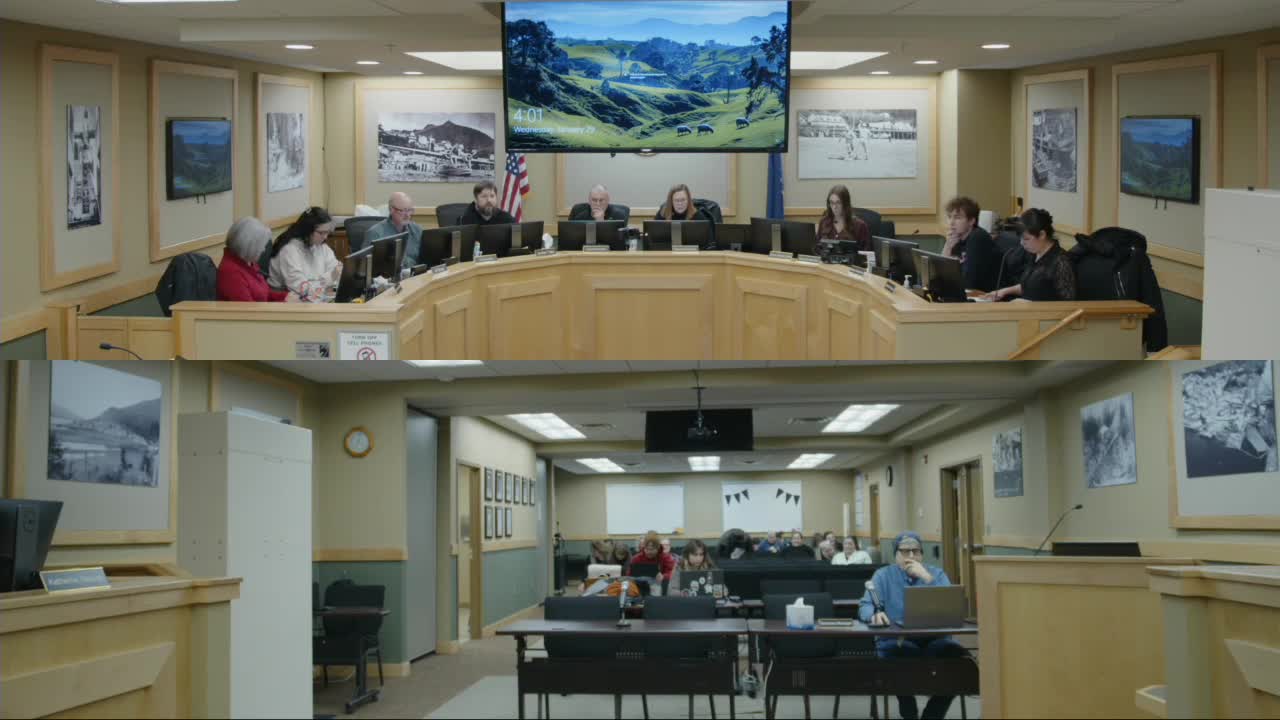
KETCHIKAN, Alaska — Dozens of parents, educators and residents told the Ketchikan Gateway Borough School District board at a public listening session that two proposed budget options under consideration would harm students and disrupt families, and that the board has not provided clear, reliable numbers for savings.
The listening session, opened by the board for public comment on district budget options for 2025–26, drew sustained criticism of both “Plan A,” which would cut specials such as music, physical education and library, and “Plan B,” which would reconfigure elementary schools by grade and eliminate some neighborhood school choices. Speakers repeatedly called for more transparency about projected savings and the full size of the district shortfall.
Why it matters: Speakers said the proposals would remove services that parents and teachers consider essential to students’ academic, social and physical development; could force long daily bus rides for young children; and risk legal exposure if special-education needs are not met. Multiple commenters urged the board to delay any vote until state funding and audit information are settled and the community has had additional input.
Parents and educators said cuts to ‘specials’ would be damaging. Lisa Delett, who identified herself as a parent, said, “we need to let our needs drive our budget, not our budget to drive our needs.” Multiple parents and teachers described how music, PE and library are the classes children most look forward to and credited those programs with supporting learning and attendance.
Concerns about special education and IEP compliance were repeated across comments. One parent said the district currently serves about 425 students in special education with eight special-education teachers and noted the draft staffing would reduce certified staff by one and eliminate instructional paraprofessionals from some schools; she warned that failing to meet IEP obligations “opens the door for litigation.” Teachers and parents asked for explicit counts of how many students with high-support IEPs would be assigned to each school under Plan B.
Several commenters said the district’s projected savings figures have been inconsistent. At the listening sessions and joint meetings, speakers reported Plan A’s savings as both $774,000 and $1.3 million; one commenter quoted a board member’s estimate of an additional $1.1 million deficit. Matthew Boyd, a parent, said, “It’s unethical. It’s not ethical in any way to not present all the numbers.” Multiple speakers urged the board not to approve restructuring until they know the final state funding (Base Student Allocation/BSA) and the governor’s budget decision, which could change the district’s projected deficit.
Advocates for quicker action also spoke, arguing the board must provide leadership even when choices are painful. Jason House, president of CALO (Ketchikan Leadership Organization), credited district leaders’ commitment and said, “We need clear and decisive leadership from you on the direction for our district.” But most public commenters urged more time for community input and alternatives that spare specials and limit long bus rides for young children.
Other recurring themes included: - Logistics: Multiple parents said moving kindergarteners or other early-grade students out of neighborhood schools would increase bus time and create childcare/transportation burdens for working families. One parent said busing a 5-year-old 20 miles a day would be unacceptable for her family. Commenters noted kindergarteners sometimes require an adult at the bus stop under current transportation rules. - Teacher and student morale: Teachers said late or rapid decisions create stress and could accelerate retirements or leave requests; one former/current teacher described moving an entire classroom over a summer and the toll of that disruption. - Requests for alternatives: Several speakers asked whether the district had exhaustively examined administrative reductions, reevaluated transportation contracts, considered a four-day week, or looked at closing or consolidating a school only as a last resort.
Board process and timing were also criticized. Speakers and several written commenters said the community saw the restructuring proposal introduced with little prior public engagement and asked the board to postpone any vote until the listening sessions conclude and the audit and state funding outcomes are known.
The listening session itself produced no substantive board action on the budget proposals. The board took two procedural votes during the meeting: approval of the meeting agenda at the start of the session and a later vote to adjourn the listening session so staff could prepare for the 6:00 p.m. meeting.
What’s next: Speakers urged the board to collect or publish full, itemized budgets and to present consistent savings calculations for each option before any formal vote. Several asked the board to develop a third scenario that would find savings while preserving specials and minimizing student travel. Board members did not announce a formal timetable for action during the listening session.
The session included many written letters read into the record and a large number of public commenters; the board recessed several times to accommodate more speakers and to allow people arriving from work to attend. The public was also informed of a state House education testimony option and an email address for submitting comments.
Ending: The listening session closed by a board motion to adjourn so the clerk could prepare for the next meeting; the board’s eventual decisions on the budget and any restructuring remain pending.