Get Full Government Meeting Transcripts, Videos, & Alerts Forever!
Get email alerts on the Stormwater Drainage Density topic
No spam. Unsubscribe anytime.
Bend advisory group explores off‑site stormwater options as infill reduces on‑lot space
Summary
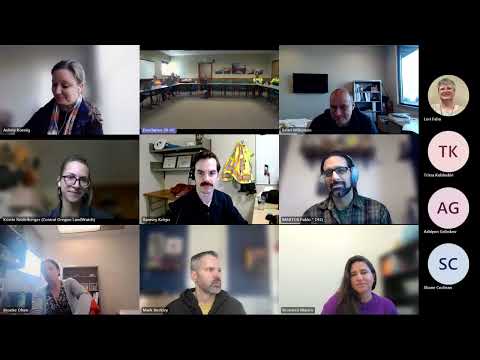
The Water Advisory Group (WAG) convened in early January for its first 2025 meeting to continue work on “drainage and density,” focusing on how the city can manage stormwater as infill and higher‑density development reduce on‑lot space for traditional retention systems.
The Water Advisory Group (WAG) convened in early January for its first 2025 meeting to continue work on “drainage and density,” focusing on how the city can manage stormwater as infill and higher‑density development reduce on‑lot space for traditional retention systems.
City of Bend environmental resources manager Lori Fayad said the discussion will feed a planned white paper and the stormwater master plan update and noted the city must align with requirements in its DEQ permit, including a November permit deadline discussed during the meeting. "This gives us license to think about more variety of ways to handle stormwater in a more efficient way," Lori Fayad said.
Why it matters: Bend’s stormwater rules currently expect stormwater to be retained on the parcel where it originates. That approach is becoming harder to meet as lot sizes fall and multifamily and mixed‑use projects become more common. The state permit language and pending DEQ guidance also push the city to define a hierarchy of stormwater management options and to apply water‑quality standards to sites that add or replace substantial impervious surface.
Discussion and options
City staff and meeting participants — including developers, engineering consultants and representatives from the Oregon Department of Environmental Quality (DEQ) — focused on three practical strategies the city could expand or clarify: preserving the status quo of fully on‑site management where feasible; allowing subdivision‑level or shared private facilities that serve multiple lots; and permitting facilities in the public right of way or other public sites (for example, parks) where space is limited.
Pablo Martos of the Oregon Department of Environmental Quality said DEQ’s permitting work is close to finishing the phase‑2 permit renewal and that regional or subdivision facilities planned to serve multiple parcels being developed together generally count as on‑site in the permit evaluation. "Regional stormwater facilities as are going to be defined in the permit evaluation report are, totally to be encouraged," Martos said, adding that the permit evaluation report will clarify the distinctions between on‑site and off‑site in the DEQ permitting context.
Engineering consultants and private builders flagged maintenance and long‑term performance as central concerns. Brian Wilkinson, principal civil engineer with AKS Engineering, said private lot systems often are not constructed or maintained to last. "I think we're kidding ourselves to think that each lot owner in the city of Bend is effectively managing their runoff," Wilkinson said, arguing that subdivision‑scale systems maintained by a single entity or public agency can be more reliable.
Developers also described practical barriers. Shane Cochran, senior geologist with The Walls Group, said small lots and topography limit where infiltration or storage can be placed, and noted differing incentives between developers who build and sell lots versus those who build and hold homes. Participants raised permitting hurdles such as restrictions on private utilities in public utility easements, a potential blocker for shared infrastructure that must cross easements.
Technical and regulatory details discussed
- DEQ permit triggers and hierarchy: Staff said the city’s MS4 permit requires a hierarchy that prioritizes on‑site solutions and applies water‑quality measures when sites add or replace substantial impervious area. The group noted a common rule of thumb discussed in the meeting — applying requirements at a 5,000‑square‑foot impervious threshold for new or replaced surfaces — but also noted exceptions and the need to reconcile local code language with the permit.
- Water‑quality event definition: City staff referenced the stormwater design criterion in use for water‑quality sizing: the six‑month event (stated in the meeting as roughly 1.5 inches within 24 hours) as the design storm that captures the first flush of runoff for water‑quality control. That definition and sizing were discussed as part of deciding what portion of runoff should be managed on a lot versus at a shared facility.
- Underground Injection Controls (UICs) and infiltration: Participants described the common local practice of using dry wells or surface infiltration for single‑family lots and noted constraints in areas with poor infiltration or where wells and sensitive areas limit UIC use.
Maintenance and ownership
A recurring question was who would be responsible for long‑term maintenance if stormwater facilities were shared or placed on public land. City staff and consultants discussed several models: private maintenance under recorded maintenance agreements with periodic reporting, public ownership and maintenance funded by rates, or hybrid approaches that use easements and maintenance contracts. Several speakers warned that shifting maintenance to a public agency would have fiscal implications and could require higher rates or new funding mechanisms.
Next steps and outreach
City staff said they will develop a white paper or technical memo for the stormwater master plan, engage more directly with private developers, and incorporate feedback from this group and the development community. Aubrey, the city staff facilitator, said the city will distribute the meeting’s Mural whiteboard for additional comments, and staff suggested follow‑up sessions in March or April to refine options and draft language.
The meeting did not include formal votes or policy decisions; participants asked staff to return with draft approaches and definitions for "on‑site," "subdivision level," and right‑of‑way options and to report how those approaches would meet DEQ permit requirements.
What was not decided
No formal policy changes were adopted at the meeting. The group did not set final thresholds or funding mechanisms, and several technical questions remain to be resolved, including: precise impervious area triggers in local code, how to handle mixed public/private runoff, and what entity would assume maintenance responsibility for shared facilities.
Looking ahead
City staff plan further outreach to private developers and continued internal review; a draft of the master plan topics is expected later in the spring. The WAG will revisit stormwater issues at its February meeting and consider a longer or additional session in April to review draft language and recommendations specific to drainage and density.
Credits
Reporting based on a hybrid meeting of the Water Advisory Group convened by the City of Bend; staff presentations by Lori Fayad and Austin (City of Bend), and comments from representatives of DEQ, private developers, and engineering firms.