Get Full Government Meeting Transcripts, Videos, & Alerts Forever!
Get email alerts on the School Vouchers topic
No spam. Unsubscribe anytime.
Superintendent warns expanding state vouchers are shifting funding away from Show Low schools and lack state accountability
Summary
Superintendent Farnsworth briefed the board on growing use of state education vouchers and their financial impact on the district, saying state oversight of voucher recipients is minimal or nonexistent and presenting district and statewide figures.
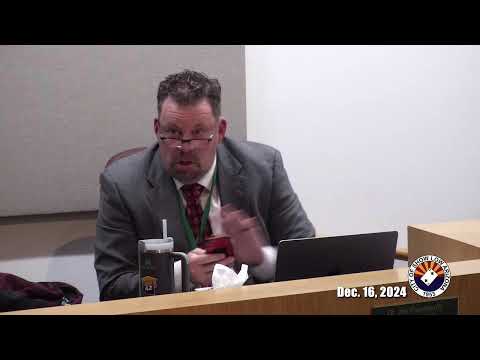
Superintendent Dr. Farnsworth told the board the district has seen a steady rise in families using state education vouchers and described the fiscal and accountability implications for the district.
Farnsworth presented district figures for school-year 2024: 291 voucher students in the state's first quarter, 349 in quarter two and 383 in quarter three. Using a rough per-pupil estimate of about $10,000, he said the district could be losing roughly $3.8 million in state funding associated with students leaving the public system for private providers receiving voucher dollars. He also cited state-level figures the district compiled showing about 75,000 students statewide no longer enrolled in public school under the voucher program and an estimate attributed to the governor of roughly $943 million in state budget outlays to voucher recipients.
The superintendent said the state program provides "no accountability": there is no state assessment requirement, no centralized reporting about how families spend voucher dollars and limited oversight of instruction provided under the vouchers. In discussion, a board member asked whether voucher-funded providers must report student learning or the use of funds; Dr. Farnsworth replied that, according to the materials he supplied, "there's no oversight" and that public school districts continue to be audited for every penny they receive while voucher disbursements to private entities carry few or no strings.
Board members reacted strongly to the presentation. One board member urged citizens to contact their legislators about the issue; another asked the superintendent to provide the detailed spreadsheet and charts from his attachments so the board could examine quarter-by-quarter and funding-category breakdowns. Farnsworth pointed to data showing a small share of voucher recipients receive high per-student payments (he cited examples of $30,000–$42,000 for special-needs students), while tens of thousands receive $7,000–$8,000 each.
Why this matters: Local districts receive less state aid when students leave under voucher programs, yet districts are still subject to audit and state-accountability requirements while voucher recipients often are not. The fiscal shift can affect staffing, programs and services in small districts.
What’s next: Farnsworth provided links and attachments to the board and agreed to share the underlying spreadsheet and charts. The board asked staff to include the voucher details in future budget conversations and legislative outreach.