Get Full Government Meeting Transcripts, Videos, & Alerts Forever!
Get email alerts on the Housing topic
No spam. Unsubscribe anytime.
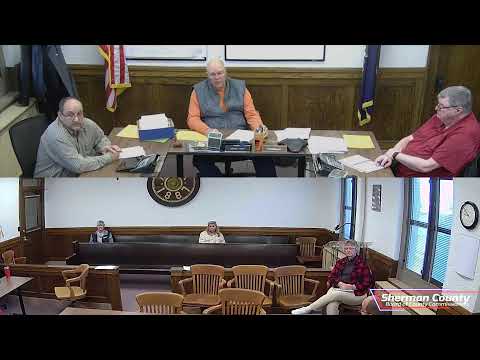
Sherman County hears proposal to use housing reinvestment district to support 10-duplex development
Summary
A presenter outlined a proposed Housing Reinvestment Improvement District (RHID) to capture incremental property taxes to fund infrastructure for a developer’s plan to build about 10 duplexes on city-owned land near Topside Manor; no formal county action was requested at the meeting.
A presenter identified only as Philip told the Sherman County Board of Commissioners on the meeting that a developer has requested creation of a Housing Reinvestment Improvement District, or RHID, to support construction of about 10 duplexes on city-owned parcels behind Topside Manor and two adjacent lots.
Philip said the RHID would capture incremental real property taxes created by the housing development — excluding the 20 mills that make up the base school levy — and use the incremental revenue to pay for infrastructure such as street grading and paving, utilities, and sewer connections. He said the district can include all taxing entities and can run as long as 25 years but that for this first project he expects a term of roughly 10 to 15 years.
The presenter described the RHID as a financing tool that allows the incremental tax revenue to reimburse infrastructure costs or pay bond debt used to build the infrastructure; once the infrastructure is paid off the captured increment would revert and future taxes would be assessed normally. He said sewer connection and other on-site work would still be a significant cost even though part of the street infrastructure already exists.
Philip said the RHID would be part of the developer’s application strategy when applying for Kansas Housing Investment Tax Credits (KHITC) and the state’s moderate-income housing program. He also summarized the approval process: the Kansas Department of Commerce must approve the district; the county, city and school district would participate in required resolutions and a public hearing; after adoption there is a 30-day protest period in which the school and county can opt out before the state’s final approval.
Commissioners asked clarifying questions about ownership of the land (Philip said the primary parcels are city-owned), the likely income level of future units (Philip described them as “low to moderate income,” comparable in size to duplexes on Cattle Trail but not deeply subsidized housing), and timing requirements for construction (Philip said tax increment only materializes after housing is built). Commissioners indicated preliminary interest but noted no formal county vote or commitment was requested at this time.
Philip provided examples of other Kansas cities that used similar districts, saying Dodge City and Garden City had used RHID-like mechanisms to develop multiple housing units. He gave county commissioners a printed outline of eligible reimbursable costs (land acquisition, site preparation, street lighting, sidewalks, water main extensions and similar infrastructure) and offered to answer additional questions through county staff.
No motion or resolution was made by the board on the RHID at the meeting; Philip urged coordination with the city and school district if the county wants to participate in the process going forward.