Get Full Government Meeting Transcripts, Videos, & Alerts Forever!
Get email alerts on the Public Safety topic
No spam. Unsubscribe anytime.
Council asks city manager to ask CBP about ocean-facing cameras after rise in unlicensed beach landings
Summary
After residents and staff reported an uptick in unlicensed watercraft landings at night, the City Council voted to have the city manager consult Customs and Border Protection about ocean-pointing/thermal cameras and to post federal contact numbers on the city website.
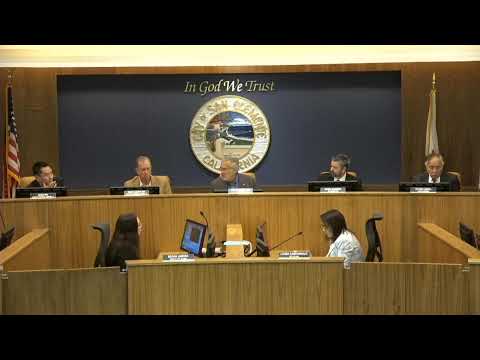
The San Clemente City Council voted unanimously Feb. 4 to ask the city manager to contact U.S. Customs and Border Protection (CBP) and related federal agencies about the feasibility of installing ocean-facing and thermal cameras at key points along the San Clemente coastline, and to post federal contact numbers on the city website so residents can report suspicious craft approaching the shore.
City staff told the council that unlicensed watercraft landings (commonly described in public testimony and staff reports as “pangas”) have increased and often occur at night. City Manager and lifeguard staff described the safety risk posed by overloaded small boats approaching the surf; staff recommended making federal maritime-coordination contact information available to the public and exploring surveillance options. The staff report cited a Department of Homeland Security/CBP approach used in Imperial Beach — a DHS-funded camera deployment that allowed local lifeguards limited access while CBP monitored the feed — and estimated on‑camera hardware costs in a preliminary range (roughly $4,000–$5,000 per camera depending on capabilities). Staff said Imperial Beach’s DHS grant totaled roughly $150,000 and that technical details (geocoding, privacy masking of private property) would need to be configured.
Public comment at the hearing reflected a range of views. Several residents urged improved surveillance and easier reporting (posting the CBP maritime coordination center number and a local CBP contact), saying federal agencies should monitor and respond. Other speakers warned against deputizing or encouraging untrained volunteers to act as law-enforcement monitors; they raised privacy and civil-rights concerns about giving public access to live camera feeds and urged that any monitoring be performed by trained law-enforcement personnel (OCSD, lifeguards, CBP). Staff said existing daytime beach cameras are already accessible via city systems during lifeguard hours but that overnight monitoring would require additional arrangements.
Following the discussion, the council adopted a substitute motion instructing the city manager to accept the staff recommendation (post federal contact information) and to contact CBP and Department of Homeland Security to inquire whether they would install and operate ocean-facing cameras at locations suggested by council and homeowner associations (including the municipal pier and homeowner-association sites at the north and south ends of town). Councilmembers agreed that, if federal agencies installed cameras, federal personnel would likely monitor them; the city asked staff to report back on feasibility, funding and monitoring arrangements.
Council members emphasized that the city was not proposing to take over immigration enforcement but was considering safety-focused technologies and improved reporting channels so residents and lifeguards can alert appropriate federal or county authorities when boats approach shore.