Get Full Government Meeting Transcripts, Videos, & Alerts Forever!
Get email alerts on the Public Transit topic
No spam. Unsubscribe anytime.
Via Grand Prairie reports ridership growth, outlines safety and driver-training steps
Summary
Via Grand Prairie told the City Council it has grown to roughly 30,000 active riders, completed about 380,000 rides since 2022 and is focusing 2025 work on safety, driver training and community outreach while monitoring vehicle supply and wait times.
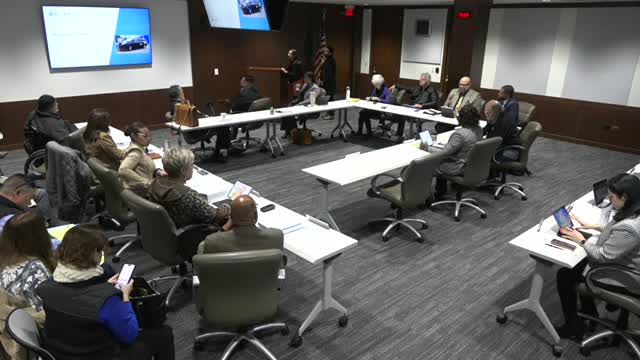
Via Grand Prairie representatives gave a year-three update to the Grand Prairie City Council, saying the on‑demand shared-ride service has seen steady ridership growth, tightened safety measures and new community engagement efforts.
City transit coordinator Sheila (no last name provided) introduced Leah, Via’s central region operations lead, who said the service has run seven days a week across Grand Prairie since early 2022 and now counts about 30,000 "active riders" (people who took a ride in the past three months). Via reported roughly 380,000 rides completed since the service began and said it is on track to complete about 150,000 rides in the current year.
Leah said productivity has improved from about 3 riders per vehicle-hour in year one to 3.5 this year, and Via is targeting further efficiency gains. She attributed ridership to serving a need among lower-income residents: Via presented survey figures that 62% of riders reported household incomes under $50,000 and roughly 75% do not have access to a personal vehicle. Council discussion and Via comments indicated about 60% of trips are used for commuting to jobs or education.
Via described three main 2024–25 priorities: service safety, driver training and community engagement. Safety investments include vehicle dash cams that record inside and outside the vehicle and provide real‑time alerts (for example, for phone use or lane departures). Via said incidents and accidents fell from 73 in contract year one (May 2022–April 2023) to 27 in the most recent contract year‑to‑date and that Grand Prairie’s event rate is low compared with other Via markets that have installed dash cams.
On driver training, Via said it conducts quarterly in-person safety and customer-service sessions, mandates wheelchair-accessible-vehicle certifications for drivers who operate those vehicles, performs individual coaching when staff observe unsafe pick‑up or drop‑off behavior, and has a local operations team in Grand Prairie to provide faster follow-up. Via said drivers who repeatedly violate policies are subject to warnings or de‑affiliation.
Council members pressed Via about unsafe stops in public rights‑of‑way. Councilmember Mike (no last name provided) and others said they had collected videos showing drivers stopping on major streets such as Carrier Parkway and South Beltline and raised safety concerns for pedestrians and other drivers. Via said its routing algorithm will not instruct drivers to stop in the middle of a major roadway and that some incidents reflect riders going to the wrong corner; Via also said it will move problematic virtual stop points and emphasize pick‑up/drop‑off safety in upcoming driver training sessions.
On fares and priorities, Via said base fares range from $3 to $4 depending on trip length and that a discounted senior fare of $2 applies; wheelchair-accessible trips receive priority for accessible vehicles and special-door‑to‑door service is available for seniors and riders with disabilities. Council asked about language capacity among drivers; Via said it would follow up with a breakdown of Spanish‑speaking drivers.
Via described fleet and supply strategy: the service has run with a typical maximum of 16 vehicles on the road but is increasing capacity toward 20 and testing plans to run up to 24 vehicles to reduce wait times. Via reported average wait times (DTA) fell from about 22 minutes in Q3 2024 to 18 minutes in Q1 of the current contract year, while noting some riders still experience waits around 30 minutes at peak times. Via said it completes roughly 3,700 rides per week under current operations and estimates an active driver pool in the 40–45 range.
Leah and Orr, Via’s general manager for Grand Prairie, described planned 2025 outreach to partners including the school district and workforce organizations to improve rider education and feedback channels. Via also said it is analyzing driver‑level data to target training and incentives and will continue to remove or relocate virtual stops that create unsafe conditions.
Council members thanked Via for the presentation and asked staff and Via to continue reporting data and follow up on specific safety concerns and driver recruitment responsiveness. The council discussion closed as Via representatives left the dais.