Get Full Government Meeting Transcripts, Videos, & Alerts Forever!
Get email alerts on the Guardianship Evaluators topic
No spam. Unsubscribe anytime.
Committee advances bill expanding who may evaluate proposed wards in guardianship cases
Summary
House Bill 36, which would add physician assistants, nurse practitioners and certain licensed counselors to the list of professionals who may perform evaluations in probate guardianship and conservatorship proceedings, passed the House Judiciary Committee after extended testimony both for and against the expansion.
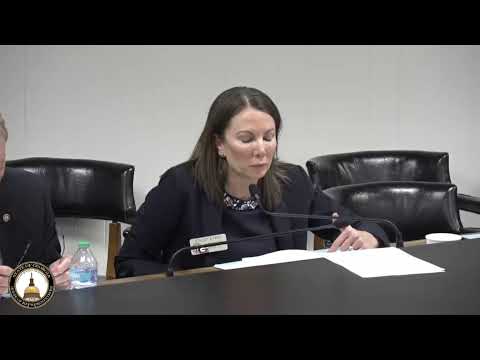
The House Judiciary Committee advanced House Bill 36 after extended testimony from probate judges, medical and mental-health professionals and disability advocates about who should be permitted to evaluate proposed wards in guardianship and conservatorship proceedings.
Representative (Chairman) Leverett, the bill’s sponsor, said the measure would expand the list of professionals who may provide competency evaluations in probate court to include physician assistants, nurse practitioners, clinical nurse specialists in psychiatric/mental health, licensed professional counselors and licensed marriage and family therapists. "We're adding... physician's assistants, nurse practitioners or clinical nurse specialists in psychiatric and mental health... and then marriage and family therapists or professional counselors," Representative Leverett said.
Supporters including the Georgia Association for Marriage and Family Therapy, the United Advanced Practice Registered Nurses of Georgia (UAPRN) and licensed professional counselors told the committee those professionals already perform cognitive and functional assessments in clinical settings and would expand the pool of available independent evaluators. Elizabeth Apley of the Georgia Association for Marriage and Family Therapy testified that licensed marriage and family therapists "have comparable education, training and experience" to other mental-health professionals on the existing list and that their evaluations are one part of a multi-step legal process.
Opponents including disability-rights advocates and self-advocates warned the expansion could increase the risk of improperly granted guardianships and urged prioritizing less-restrictive alternatives such as supported decision-making. Jessica Cowell of the Georgia Council on Developmental Disabilities told the committee that the evaluation "requires nuances" and said the bill risks eroding rights for people with intellectual and developmental disabilities if evaluators lack specific training.
Cobb County Associate Probate Judge Kristen Polin, speaking for the Probate Judges Council, said the bill would help courts meet statutory duties because the current eligible-evaluator pool is small in many counties. Judge Polin said her court oversees a county of "almost 800,000" residents and currently relies on four approved evaluators, three of whom are licensed clinical social workers who perform the majority of evaluations. "In our court, it's at least 75% of them are done by LCSWs," Judge Polin said, describing long delays when evaluators are not available.
Committee members pressed witnesses about clinical training and about how the statute defines "gross settlement" for conservatorship settlement approvals. Representative Oliver and others asked for clarification of language around a $25,000 threshold and how structured settlements are counted; sponsors said the language is intended to harmonize with prior changes for minor settlements and that they would review drafting questions.
Representative Scoggins said sponsors had reviewed other states and found similar examiner lists in neighboring states and that a recent statutory increase raised evaluator fees from $125 to $200. Representative Evans said he would vote against the bill in committee because he remained unconvinced that some of the added professions met the clinical threshold he wanted for these evaluations; other lawmakers argued that primary-care physicians or other existing evaluators sometimes lack mental-health expertise and that the proposed list includes providers who see these cases frequently.
After debate the committee moved and seconded the bill and advanced House Bill 36 by voice vote. The transcript shows both organized support and organized opposition; issues raised included evaluator qualifications, the probate court process and the use of supported decision-making as an alternative to guardianship.