Get Full Government Meeting Transcripts, Videos, & Alerts Forever!
Get email alerts on the Historic Preservation topic
No spam. Unsubscribe anytime.
Jamestown council tables local preservation ordinance after public comment
Summary
The Jamestown City Council on Feb. 3 postponed action on a 42-page draft Local Preservation Ordinance after public comment and council review; staff and counsel said the ordinance would enable protections and access to state and federal funding but requires more review and outreach to property owners.
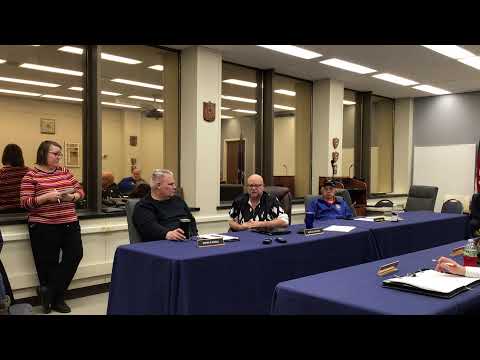
Jamestown City Council members on Feb. 3 voted to table consideration of a proposed Local Preservation Ordinance (LPO) after public comment and council discussion.
The ordinance, presented as a roughly 42-page draft, would establish local historic-preservation protections and — according to city staff — open eligibility for certain state and federal funding streams for qualified projects. Pete Maraglia, a downtown commercial property owner, urged the council to contact property owners directly about the proposal before moving forward. “I think property owners, especially downtown property owners, should have the opportunity. You know? I think they should be directly asked by the city of what their thoughts are on this,” Maraglia said during the public-comment period.
City counsel and planning staff emphasized the draft is an initial version and that the ordinance would not automatically restrict an owner making privately funded changes. “For a local preservation ordinance, the intent of it is not to be restrictive and to kind of cut off our noses by our face. It's to actually serve as an additional tool and an opportunity for property owners,” said incorporated counsel Elliot Romano. Planning staff said local designation can be required to protect a landmark and can affect eligibility for state designation and funding. A planner on staff read that the ordinance “is not required to receive a national register designation. It is required to protect a building, a landmark, and it is required to, receive a state designation.”
Council members said the draft is new to many and that committee members have not had time to digest its length and implications. The council’s public-safety committee reviewed the draft and recommended allowing more time for input. Council discussion noted published minutes from the City Planning Commission as an informational source and proposed seeking additional feedback from property owners, local architects and registrars. The council formally tabled action to gather more information before any vote.
The council did not record a roll-call vote count in the on-record discussion; the motion to table was entered and continued. City staff indicated there will be at least a 30-day public comment period before final adoption could be scheduled. Counsel also provided a handout and a “bubble chart” outlining criteria for district creation and steps for nominating properties.
Council members signaled plans for greater outreach to downtown property owners and for a future, fuller briefing to the full council. No ordinance language was adopted at the Feb. 3 meeting; the item remains under committee review.