Get Full Government Meeting Transcripts, Videos, & Alerts Forever!
Get email alerts on the Comprehensive Planning topic
No spam. Unsubscribe anytime.
Nassau County updates 2050 Vision as population nears 100,000
Summary
County staff outlined community engagement findings and growth scenarios for a 2050 comprehensive plan update, noting needs for housing, job growth and conservation to guide land-use regulations.
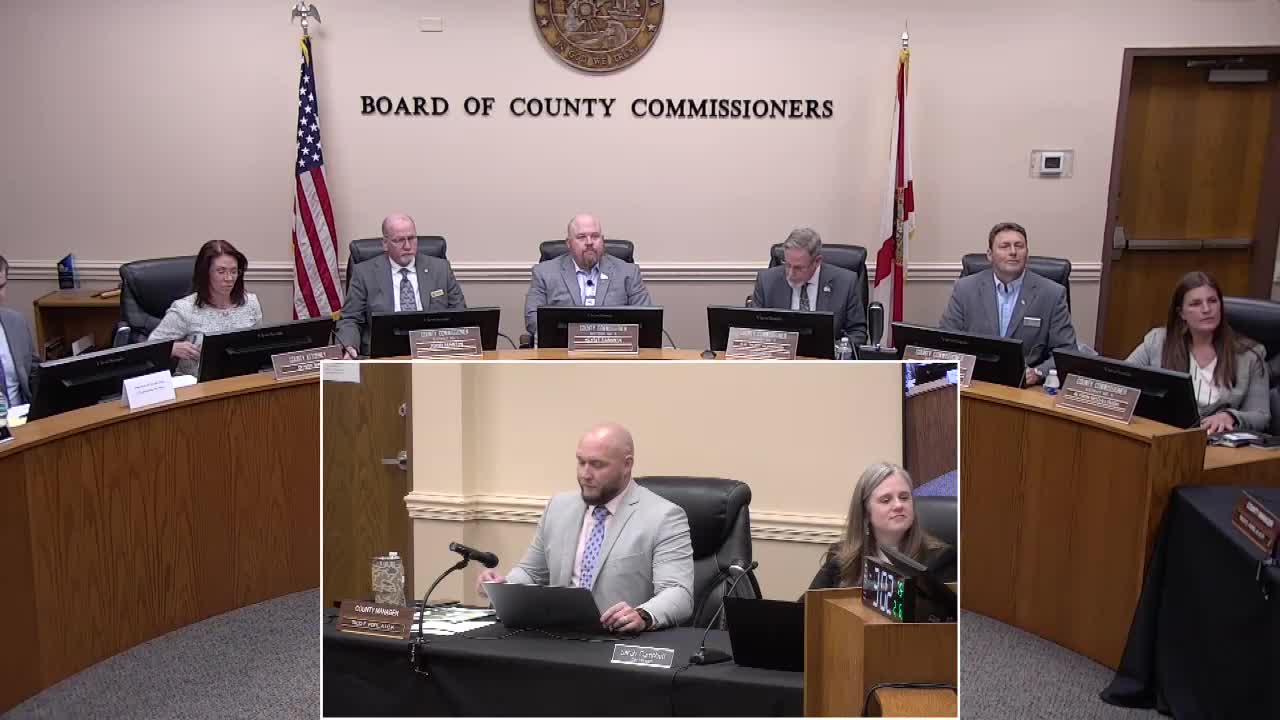
Holly Coyle, economic resources manager for Nassau County, told a joint meeting of the Nassau County Board of County Commissioners and the Fernandina Beach City Commission on Feb. 6 that the county has begun a vision plan to feed a required comprehensive plan update with a 25-year horizon.
Coyle said the county must update its comprehensive plan “every seven years” to stay consistent with state statutes and that the current 2030 horizon requires renewal. She told elected officials the county’s population recently passed 100,000 and preliminary work projects growth toward about 200,000 people by 2050, which would require roughly 38,000 new jobs and about 38,000 new dwelling units to maintain a one-to-one jobs-to-housing ratio.
County staff described a yearlong community engagement effort that included four main events, 20 pop-ups, surveys and stakeholder meetings. The engagement repeatedly surfaced two top resident concerns: protection of natural resources and managing growth. Residents also emphasized affordable housing, more local job opportunities, traffic congestion and preserving community character while seeking multimodal connections, diversified economic opportunities and preserved open space.
Using that input, staff created “building blocks” that will inform objectives and strategies for a preferred growth scenario now in development. The county presented three draft growth scenarios — trend, incremental and “think big” — and said the scenario favored by survey respondents concentrates growth around municipalities and planned public facilities while protecting rural lands on the west side of the county. Elements the county highlighted in the preferred approach include new employment centers near I‑95 interchanges and expansion of existing industrial parks.
Next steps laid out by Coyle: finalize the preferred growth scenario and vision plan, return to the community with presentations, schedule public hearings for adoption, use the adopted vision to update the comprehensive plan, and then adopt implementing land‑development regulations. City and county officials were urged to remain engaged throughout the roughly 18–24 month process. Elizabeth Beck was named as the county planner overseeing the project.