Get Full Government Meeting Transcripts, Videos, & Alerts Forever!
Get email alerts on the Captive Insurance Reform topic
No spam. Unsubscribe anytime.
House committee approves bill to broaden captive insurance financing options
Summary
The Georgia House Committee on Insurance passed House Bill 348, a Department of Insurance-requested measure that allows captive insurers to accept investor contributions and alternative financing, while preserving departmental oversight and reporting requirements.
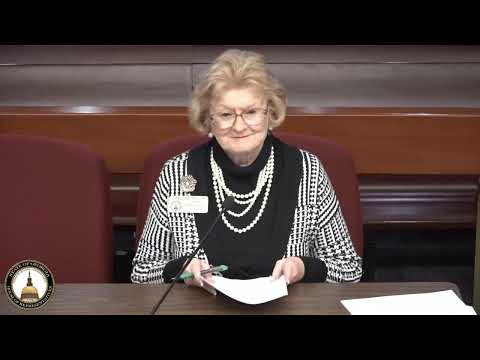
House Bill 348, LC520715, passed in committee after sponsor Representative Bruce Williamson described it as a Department of Insurance request to ‘‘open up the opportunity for a more flexibility in our captive insurance space.’’ The bill would allow captive insurance entities—insurers formed to cover risks of their parent companies—to accept investor contributions and alternative financing arrangements to bolster surplus.
The measure changes statutory language to permit investment vehicles or securities structures that can feed capital into captives. Williamson said the change ‘‘allows our businesses in Georgia to have more flexibility to structure their risk management plans to their maximum advantage’’ in a tight insurance market.
Supporters and department staff emphasized oversight. Jeremy Betts, an attorney with the Georgia Department of Insurance, told the committee he was available to answer technical questions. The department described a review regime that must occur before any plan amendment is approved, including licensure, annual audits, quarterly analyses and periodic examinations of domiciled entities. A department official said inception of an investment vehicle would require prior sign-off by the commissioner’s office and that licensed captives would be subject to annual audits and quarterly monitoring.
Lawmakers pressed on practical operations. Representative Taylor asked for examples of ‘‘alternative forms of financing’’ and was told the bill would allow contracts similar to catastrophe bonds—where outside investors provide capital and receive returns unless losses exceed defined triggers. Representatives pressed on how stop-loss layers and reinsurance purchases would work; sponsors and department staff said arrangements would vary by firm and that reinsurance markets would continue to cover layers beyond a captive’s retained risk.
Multiple members said the change could make Georgia more attractive as a domicile for captive insurers. Committee members noted neighboring states such as North Carolina and Tennessee have larger captive markets; department staff said the bill’s expanded wording would let Georgia accommodate additional lines without forcing companies to charter separate captives in other states.
The committee voted to pass the bill. No public witnesses spoke for or against the measure at the committee meeting.
The bill’s passage in committee does not itself change law; it advances the measure to subsequent legislative steps.