Get Full Government Meeting Transcripts, Videos, & Alerts Forever!
Get email alerts on the Hb 218 Wine Discount topic
No spam. Unsubscribe anytime.
Committee considers allowing retail discount on de‑alcoholized wine; amendment adopted by unanimous consent
Summary
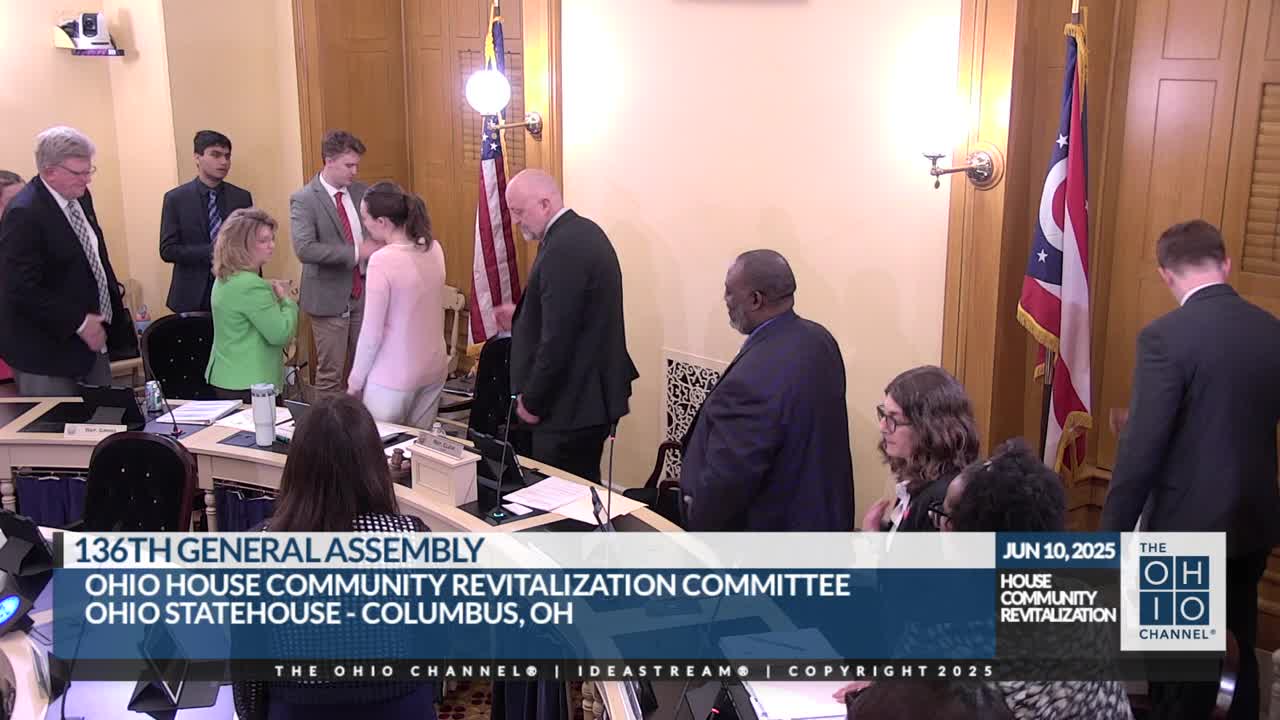
The Ohio House Community Revitalization Committee held a second hearing on House Bill 218, which would let retailers apply case‑purchase discounts to de‑alcoholized wine; an amendment clarifying mixed‑case discounts was adopted without objection.
The Ohio House Community Revitalization Committee on an unspecified date held a second hearing on House Bill 218, which would allow retail liquor permit holders to offer existing case‑purchase discounts to de‑alcoholized wine.
Proponents said the change aligns pricing rules with the product’s low alcohol content and would reduce consumer confusion. Gregory Stokes, a Columbus wine retailer and consultant, told the committee the bill would extend “the option to discount wine to include the dealkalized wine” and argued there is “no obvious strong reason that a dealkalized product should not be allowed the same latitude of pricing flexibility.”
The bill would modify Ohio’s retail discount rules to include beverages the statute defines as de‑alcoholized wine — products with alcohol content reduced to 0.5% ABV. Stokes also said the State of Ohio currently requires “a minimum pricing markup from wholesale to retail at the rate of 50%,” and noted existing statutory language already permits a retailer to discount by case for purchases of six to 12 bottles of wine. He urged parity for de‑alcoholized products to avoid consumer and retailer confusion.
Representative Salvo moved an amendment (Amendment 577) to clarify that when a case includes both de‑alcoholized beverages and regular wine, the discount applies to both kinds of bottles. There was no recorded objection; the chair stated, “Without any objections, the amendment becomes part of the bill.” The committee concluded the second hearing for the bill after the amendment was adopted by unanimous consent.
No formal roll‑call vote on final passage of the bill took place during the hearing; the record shows only proponent testimony and the adoption of the clarification amendment.
What happened next: The committee closed the second hearing on HB 218 after adopting the amendment; any further committee action, floor scheduling, or final disposition was not specified during the hearing.
Sources and evidence: The actions described above are drawn from the committee’s second‑hearing remarks and testimony recorded in the committee transcript.