Get Full Government Meeting Transcripts, Videos, & Alerts Forever!
Get email alerts on the Land Use Permit topic
No spam. Unsubscribe anytime.
Board of Appeals continues 695 Rhode Island permit after planning-code change
Summary
The San Francisco Board of Appeals on Feb. 5 continued an appeal over an alteration permit for 695 Rhode Island St. after the Planning Department identified a planning-code amendment that made the issued permit noncompliant. The continuance gives the permit holder time to pursue revisions or a zoning variance.
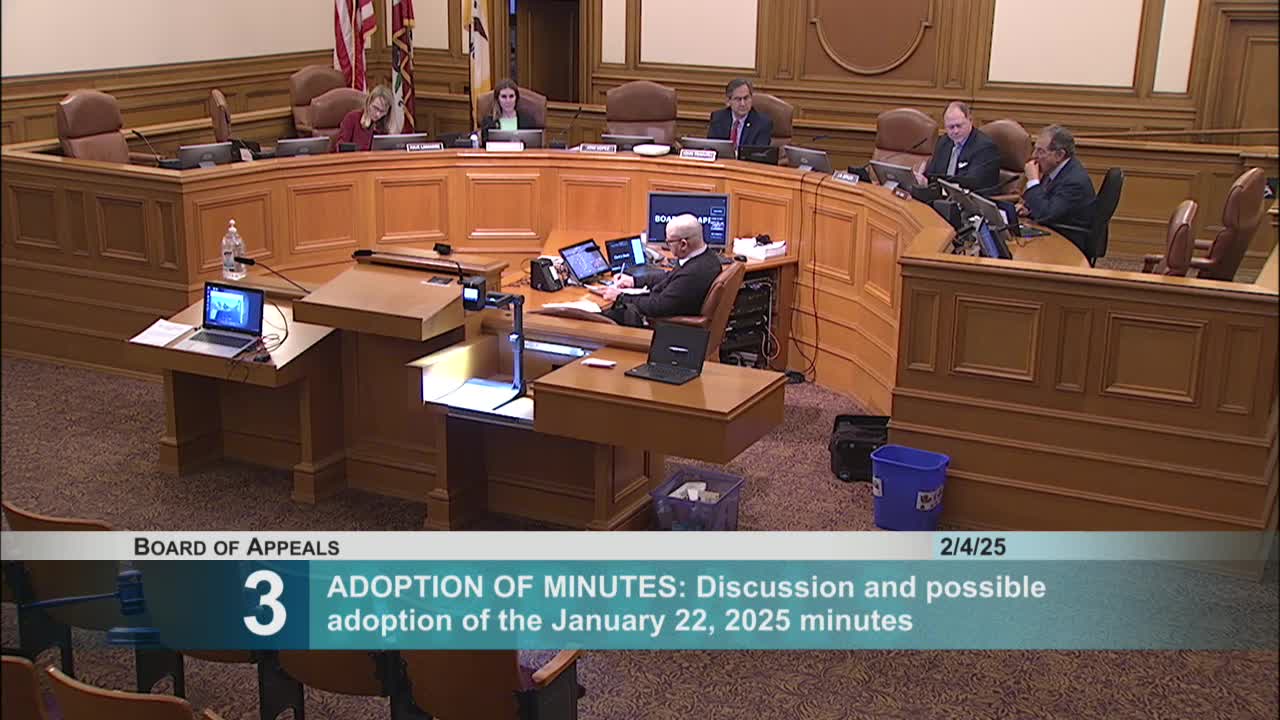
SAN FRANCISCO — The San Francisco Board of Appeals on Feb. 5 voted 3-0 to continue an appeal of an alteration permit for 695 Rhode Island Street to April 16, giving the permit holder time to respond after a planning-code change rendered the issued permit inconsistent with current rear-yard rules.
Corey Teague, zoning administrator for the Planning Department, told the board that a 2019–20 discretionary review approved the project under the planning code in effect then, but a 2024 amendment changed rear-yard averaging rules. “You can no longer average the 25%,” Teague said, noting the code now requires a 30% rear yard across residential districts and contains no grandfathering for this situation.
The permit at issue — issued Dec. 9, 2024 (permit number 201912200232) to Charles Quacks — covers a remodel and a vertical third-floor addition, new rear horizontal extension at first and second floors, façade alterations, a new garage door, driveway and curb cut. Teague told the board the department supports a continuance so the permit holder can evaluate options, which include revising plans to meet the current code or seeking a zoning variance.
Victor Marquez, representing the project sponsor, said the project has been in process since 2019 and that withdrawing the permit and refiling would be costly given geotechnical and other reviews already completed. “We’re leaning towards seeking a zoning variance,” Marquez said, adding the team needed time to study that option after notification on Jan. 31 of the code change.
Board President John Trezvina moved to continue the matter to April 16, 2025. Vice President JR Epler and Commissioner Rick Swig voted aye; the motion carried 3–0.
The appellant, Dan Feldman, did not appear in person or on Zoom, and board staff said repeated outreach had not elicited a response. The continuance was granted without opposition from the Planning Department or the permit holder.
Planning staff and the permit holder told the board the continuance is intended to let the project sponsor either amend the plans to comply with the revised rear-yard requirement or pursue a variance; if a variance were granted, that could allow the issued permit to proceed without plan revision. The board’s action simply continued the appeal hearing to April 16 and did not determine whether a variance or revised plans would ultimately be approved.