Get Full Government Meeting Transcripts, Videos, & Alerts Forever!
Get email alerts on the Animal Cruelty topic
No spam. Unsubscribe anytime.
Committee advances treatment‑of‑animals bill after wide testimony; Game and Fish enforcement authority added and penalty structure adjusted
Summary
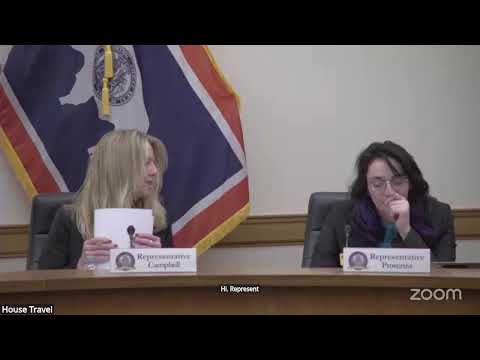
The Travel, Recreation, Wildlife & Cultural Resources Committee advanced House Bill 275, adding enforcement authority to Game and Fish and adopting a graduated penalty structure after hours of public testimony on cruelty to wildlife and use of vehicles in taking animals.
The Travel, Recreation, Wildlife & Cultural Resources Committee advanced House Bill 275 on a broad record of public testimony and technical amendments, adding enforcement authority for Wyoming Game and Fish and adopting a graduated penalty provision that makes a first offense a misdemeanor.
Representative Byron, the bill sponsor, described HB275 as an update to state law addressing cruelty to animals statewide, including language on knowingly and intentionally tormenting or torturing wildlife. He told the committee the bill had drafting errors that the sponsor's amendments were designed to fix and explained the measure increases tools for prosecutors and regulators to respond to "unthinkable acts of cruelty."
State Superintendent Megan Degenfelder testified in support, saying the Sublette County incident that prompted the legislation "was horrifying" and that she spoke in several roles — as superintendent, a land commissioner and lifelong hunter — urging passage.
Wyoming Game and Fish Director Angie Bruce and Chief Warden Dan Smith described enforcement implications. Warden Smith summarized: "This bill does provide a felony penalty in Title 6 for knowingly and with intent causing undue suffering, torture, or mutilation to any living wildlife, including predatory animals..." He also told committee members that as drafted certain parts of the bill would be in Title 6, which could limit Game and Fish wardens' ability to enforce; the sponsor offered an amendment to place parallel language in Title 23 to grant enforcement authority to Game and Fish wardens for wildlife‑specific provisions.
The committee heard several hours of public comment from a wide variety of stakeholders — agricultural representatives, wildlife advocates, sportsmen and local officials. Paul Ulrich, a Sublette County resident and hunting guide, said the public supports strong action and urged felony penalties for the most egregious acts: "Rarely in the legislative realm do we have the opportunity to do the right thing simply because it's the right thing to do." Representatives of law enforcement (Alan Thompson of WASCOP) and agricultural groups asked the committee to add or accept language preserving predator management practices and to ensure Game and Fish and local law enforcement have concurrent jurisdiction so intentional livestock‑protection activities are not criminalized. Some commenters urged the committee to go further to ban mechanized pursuit for sport; others warned about unintended consequences for research, livestock protection and nuisance animal control.
Key committee actions: - Sponsor cleanup amendment (drafting/clarifying language, exclusion of cold‑blooded animals) — adopted. That amendment added language to clarify scope and specifically adjusted definitions so that fish, amphibians and reptiles were not unintentionally covered. - Enforcement authority amendment — adopted. The sponsor inserted wording that parallels the Title 6 cruelty text into Title 23 so Game and Fish wardens have explicit enforcement authority for wildlife provisions. - Penalty amendment (graduated penalties) — adopted. The committee inserted a new section making a first offense under the cruelty provision a misdemeanor (up to 6 months and a fine up to $5,000) with heavier penalties on repeat or escalated conduct. The committee also adopted language allowing courts to revoke hunting privileges for up to three years in appropriate cases.
Warden Smith cautioned that making the first offense a felony could create enforcement and prosecutorial challenges and described how existing wildlife offenses are structured in Title 23 (many become felonies only after repeated convictions). Law enforcement representatives said concurrent jurisdiction language would help ensure Game and Fish wardens and county peace officers can both act when appropriate.
After amendment votes, the committee took a roll call on the amended bill. The clerk recorded nine ayes; the chair announced the bill will be carried to the House floor for additional work. Committee members said they expect further technical amendments on the floor and encouraged stakeholders to continue working with staff to address implementation details such as reporting and exceptions for agency research or predator management.
The committee's action sends HB275 forward with clarified enforcement authority for Game and Fish and a revised penalty structure that the committee said balances public outrage about recent events with concerns from agriculture and law enforcement about necessary predator‑management tools.