Get Full Government Meeting Transcripts, Videos, & Alerts Forever!
Get email alerts on the Snow And Ice Management topic
No spam. Unsubscribe anytime.
Public works details winter storm costs and tracking; no formal action taken
Summary
City public works staff presented a breakdown of labor, material and equipment costs for recent winter storms, year-to-date totals and how the department records events; committee received the update with no vote.
Public works staff presented a detailed accounting of the department’s response to recent winter storms, including per-event labor and material costs, and a year-to-date summary of expenditures and hours.
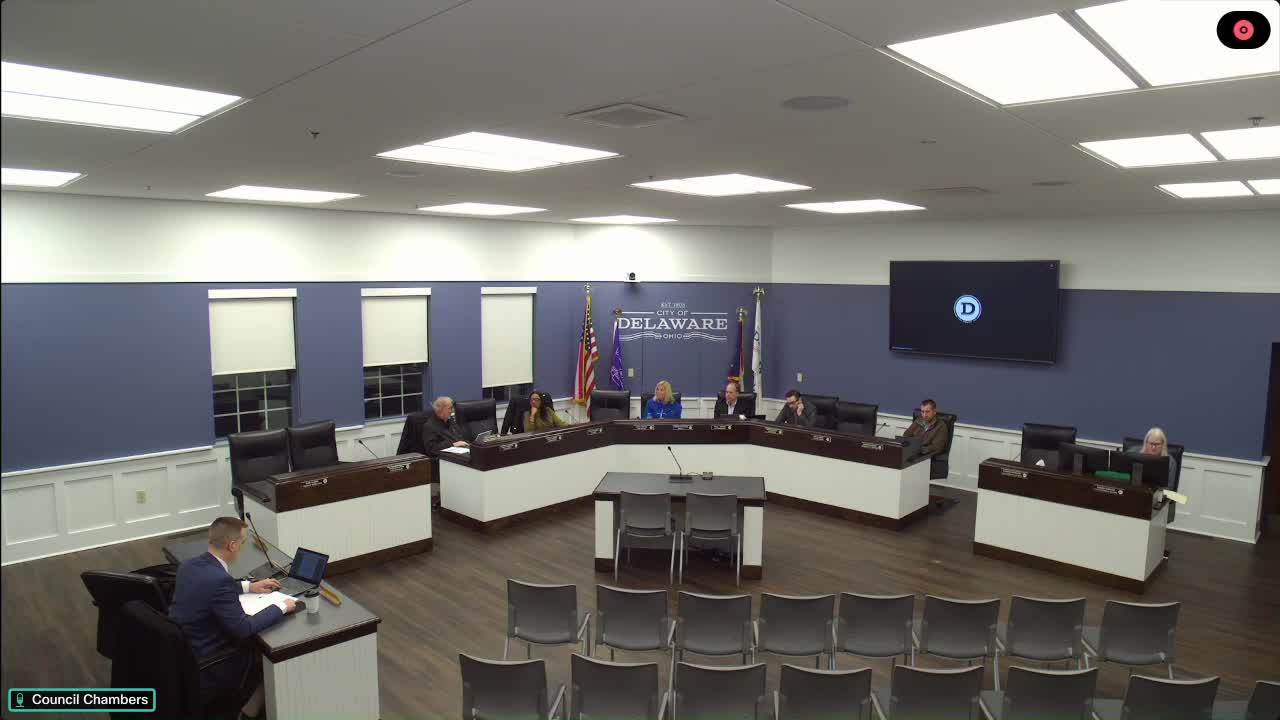
The presentation, given at the Delaware City Public Works/Public Utilities Committee meeting on Feb. 4, 2025, showed that a 3–4 inch storm earlier this winter required about 350 total staff hours to manage and cost just over $67,000 in labor and materials. Staff reported labor for that event at $17,776 and material costs in the event of about $37,000. The department also provided a year-to-date total for the winter season of roughly $221,400 for labor, materials and estimated equipment costs, and said it has so far used about $88,000 in salt and about $45,000 in estimated equipment cost for the season.
The presentation described the department’s event-tracking practice: an event’s “start” is when crews first apply brine or otherwise begin pre-storm actions, and the “end” is when priority 3 streets (local loops and cul-de-sacs) are fully cleared. Staff said the event report is typically completed by noon after an event ends and that the department creates a separate document for each storm that lists hourly straight-time and overtime costs, material usage (brine vs. rock salt), and equipment cost attribution.
Committee members discussed using the numbers to communicate value to residents, for example by explaining the relationship between pre-storm brine application and reduced post-storm impacts. One committee member suggested preparing narrative or visual materials while snow is fresh in residents’ minds so the public better understands the labor, hours and costs involved. Another member noted the practical trade-off managers face when deciding whether to pre-treat roads (brine) or wait and respond after accumulation.
Staff said routine updates will be made after each event and that a new event report would likely be available after expected upcoming weather. There was no formal motion or vote on the snow-and-ice reporting itself; the item was informational.
Committee members asked operational questions about timing and public messaging. Staff said brine would not be applied if an incoming system begins as rain, but crews will be staged and ready if conditions turn to sleet or snow. Staff also said nighttime response has dominated this winter’s work and that reports show much of the work has required overnight shifts.
The committee received the report with no formal action. Staff said the department will continue to produce the event reports and make them available to the committee and the public.