Get Full Government Meeting Transcripts, Videos, & Alerts Forever!
Get email alerts on the Solid Waste Management topic
No spam. Unsubscribe anytime.
Committee hears bill to let counties withdraw from joint solid-waste districts amid Sunny Farms complaints
Summary
Sponsors told the Community Revitalization Committee House Bill 222 would create a clear withdrawal process for counties in joint solid-waste districts and update rules for construction-and-demolition debris; sponsors cited health complaints and large volumes of out-of-state waste at Sunny Farms landfill.
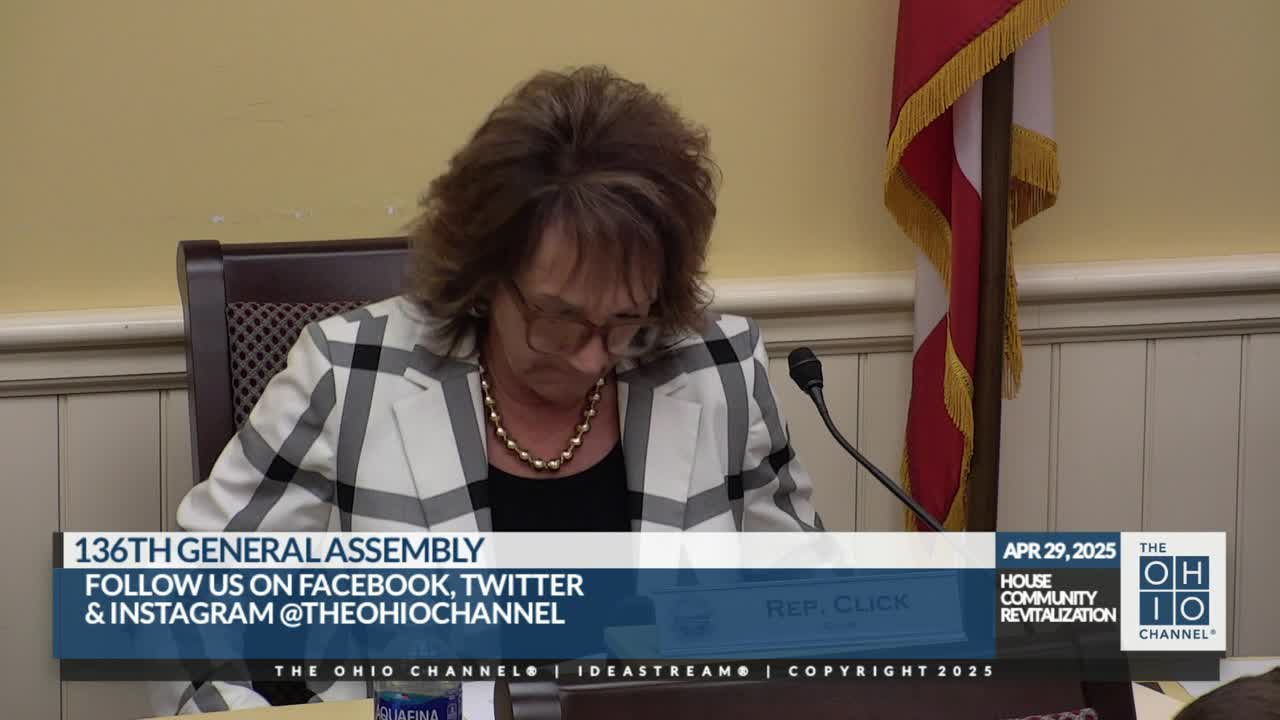
Representative Gary Clique, sponsor of House Bill 222, told the Community Revitalization Committee that the bill would create a formal process allowing counties to withdraw from joint solid-waste management districts and update oversight of construction and demolition debris.
"House Bill 2 22 focuses construction, and demolition debris. This provides a clear process for counties that wish to withdraw from a joint solid waste management district," Clique said during sponsor testimony. He said the measure would give counties "greater flexibility" while ensuring "transitions happen in an orderly and fair manner."
The bill addresses a long-standing dispute involving the Sunny Farms landfill near Fostoria and the Ottawa–Sandusky–Seneca (OSS) solid-waste district. Sponsors said the landfill accepts roughly 2,200,000 tons a year and that about 98% of that waste comes from out of state, a point they used to argue Seneca County lacks local control over landfill operations and expansions.
Sponsors described the proposed withdrawal process this way: a county would notify the district and the other counties, execute a memorandum of understanding to divide assets and responsibilities, and—if counties cannot agree—bring the dispute to a court in an adjacent judicial district. "They don't need the permission of the other counties to withdraw, but they do have to execute a memorandum of understanding," Clique said.
Committee members asked about fee changes and environmental oversight. Sponsors repeatedly said the bill does not raise dumping fees from current practice. Clique said the fee structure in practice is roughly $1–$2 per ton for in-district loads, $2–$4 per ton for in-state but out-of-district loads, and that interstate commerce constraints prevent charging out-of-state loads a different rate. He told the committee, "There is no change in the rates, of the dumping fees."
On oversight, sponsors said the U.S. Environmental Protection Agency is already involved in the Sunny Farms situation and that the EPA "will continue to be involved." They also said local health departments would play a key role in inspections and enforcement and that some local health departments have invested in new leadership and staffing because of the issue.
Committee members raised the potential fiscal effects on the district if a county withdrew. Clique said opponents in other counties have argued withdrawal would force tax increases, but he countered that local counties could gain leverage to negotiate improvements if they had the right to leave.
No vote was taken; the committee heard sponsor testimony and took questions. The hearing record shows a large public and local-government concern centered on alleged odors, leachate spills, and perceived regulatory shortfalls at Sunny Farms, along with calls for more direct local control.
If advanced, the bill would change the statutory process for withdrawal and require counties to negotiate memoranda of understanding or seek judicial resolution, but it does not itself change current dumping fees, sponsors said. The committee concluded the first hearing on House Bill 222 with sponsors available for follow-up questions.