Get Full Government Meeting Transcripts, Videos, & Alerts Forever!
Get email alerts on the Wildlife Management topic
No spam. Unsubscribe anytime.
Commission hears split public and staff views on night-vision coyote season; KDWP keeps status quo pending more data
Summary
KDWP biologists, law enforcement and public commenters offered competing evidence and views on the state’s night-vision coyote hunting season. KDWP said the literature shows mixed conservation effects from predator removal, law enforcement raised enforcement and poaching concerns, and the agency will continue to gather data and public input before proposing regulatory change.
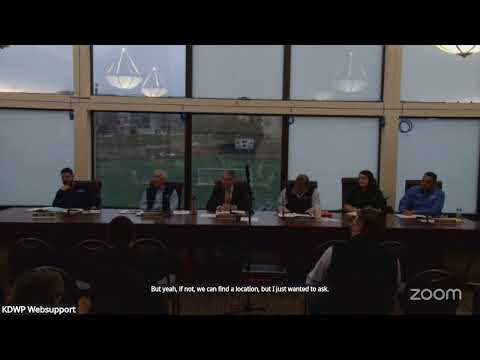
The Kansas Department of Wildlife & Parks presented scientific, law-enforcement and social perspectives on the department's night-vision (thermal) coyote hunting season, a controversial topic that generated sustained public comment at the commission meeting.
John Beckman, KDWP wildlife assistant director for research and surveys, summarized ecological literature and KDWP findings. He said coyotes are native and widespread in Kansas and emphasized complexity in predator–prey dynamics: harvest does not always cause sustained increases in prey populations because prey responses depend on scale, habitat ("bottom-up" factors) and local conditions.
"Predator control often is a very temporary, it's not a long term solution," Beckman said, noting reviews and meta-analyses show predator removal usually produces population gains only for small, declining populations or at tightly controlled local scales. He told commissioners that KDWP's management emphasis remains habitat-focused: "There's a reason that our Habitat program is named Habitat First"
Colonel Greg Kaiser, KDWP law enforcement, told the commission that thermal hunters are hard to inspect in the field once they leave for night hunts and that wardens have limited ability to monitor tournaments and private events. He said law enforcement has seen incidents that raise concern — including recent investigations of deer poaching and bobcat incidents that involved thermal equipment and suppressors — and asked commissioners to consider enforcement difficulty when weighing policy changes.
"Recently, we have seen an increase in criminal activity involving thermal scopes," Kaiser said, and noted that thermal-equipped hunters are difficult for wardens to locate after they depart for the field.
Public comment included multiple positions: some competitive night-hunting participants and several landowners urged expanded or year-round thermal opportunity to reduce coyote predation on livestock, fawns and ground‑nesting birds; several other residents, conservation advocates and non-hunting commenters urged restriction or no expansion on safety, animal welfare and ecological-grounded reasons. Speakers reported local experience both ways: some landowners reported reduced depredation after aggressive predator control; others raised safety and nocturnal shooting concerns.
KDWP staff presented estimates that 6,000–7,200 people may hold night-vision permits this season and said the issue remains controversial. Beckman said ongoing and planned research (statewide turkey and quail projects; future mule deer/pronghorn studies) will help inform management, and KDWP said it will gather additional public input in coming months. As of the meeting, KDWP offered no formal proposal to expand or curtail the season and the commission did not vote on a change.
Ending: KDWP will continue to collect biological data and public comment; the agency recommended no immediate rule change but signaled more public engagement and research to inform future decisions.