Get Full Government Meeting Transcripts, Videos, & Alerts Forever!
Get email alerts on the Parks Arboretum topic
No spam. Unsubscribe anytime.
San Antonio leaders hear plan for roughly 200‑acre Arboretum; organizers eye $25 million from 2027 bond
Summary
City council received a presentation on the Arboretum of San Antonio project, which organizers say will occupy about 200 acres on the city’s south side, complete a master plan in April 2025 and seek roughly $25 million in a 2027 bond measure alongside other funding sources.
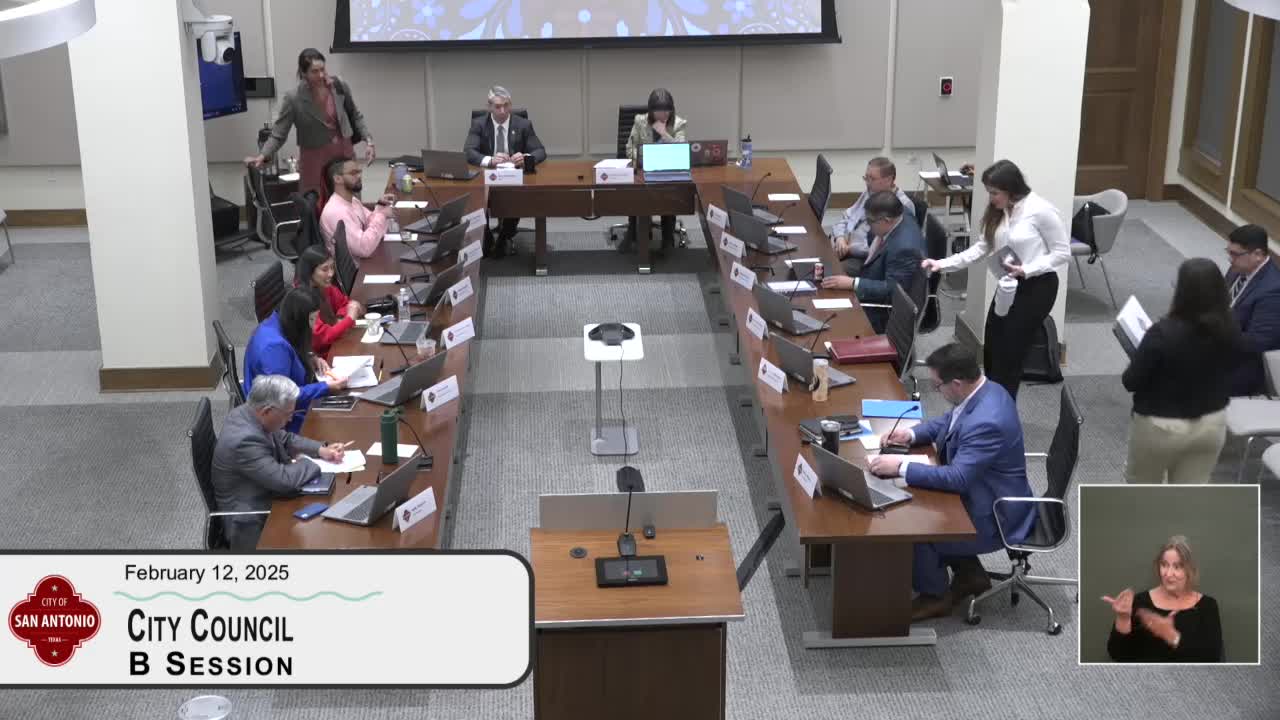
The San Antonio City Council on Feb. 12 heard a detailed presentation on the Arboretum of San Antonio project, a planned tree-focused park and education center organizers say will occupy about 200 acres on the city’s south side and include an 188‑acre core parcel purchased with support from Brooks.
Organizers framed the arboretum as an educational, recreational and conservation resource they expect to make free to local residents. Evangelía Flores, who identified herself as president of the Arboretum of San Antonio board, opened the presentation: “Soy Evangelía Flores y soy la presidente del Arburerum de San Antonio. Estoy muy orgullosa y honrada de tener el liderazgo...” She and other presenters described a plan that the team expects to finish in April 2025.
Why it matters: presenters said the site could serve as both a local park and a regional attraction, hosting school field trips, research and community programming while helping expand San Antonio’s tree canopy and resilience to climate change.
Project scope and timeline Organizers said the core property is the former Old Republic golf club on the south side near South East Military Drive and Salado Creek. The presentation listed 188 acres bought for the arboretum, an additional purchase of about 18.5 acres that would provide parking and buildings, and described the assembled footprint as “about 200 acres” when the parcels are combined.
Tom Courson, who the presentation described as the project’s board leader during a transition, reviewed the planning process and said consultants from Sasaki are leading a master-plan effort. Courson said the team has run three design alternatives and will fold community feedback into a single concept: “tenemos tres diferentes diseños... lo que queremos es juntar estos tres en un concepto final.”
Community engagement and partners Presenters said the Arboretum team has reached a broad cross-section of the public — reporting contact with roughly 18,000 people through events and online surveys — and has held multiple community meetings. They named local partners including Palo Alto College (tree-planting and watering partnerships) and Brooks, whose executive director (referred to as Leo in the presentation) the presenters thanked for a $1 million contribution to buy land and for other support.
Organizers told the council they are reserving about 18 acres within the plan for a county-led portion that would focus on access for children with disabilities; the presentation referenced a county contribution of $7.3 million in that context.
Funding and operations The Arboretum team described the project as multimillion-dollar in scale and said their current planning anticipates asking for approximately $25 million in a 2027 bond measure to cover phase‑one launch costs. Presenters said that bond ask would be paired with local, state, federal and philanthropic fundraising and that the city’s recent financial support has already helped start planning work. The team said they will not build a large nursery or other major infrastructure until the master plan is complete.
Access and equity Multiple councilmembers and presenters raised access and equity questions. Adriana Quiñones, introduced as the new board president, was explicit about public access: “No me puedo imaginar ningún escenario en donde esto no fuera gratis para el público, tiene que ser gratis,” she said. Councilmembers pressed organizers to ensure free access for San Antonio residents and to spell out transit and safety plans for the site.
Safety and operations Presenters acknowledged safety concerns that come with large open green spaces and said they plan to coordinate with neighbors, social-service organizations and city staff to reduce encampments and address vulnerability among people experiencing homelessness, while also preserving public access. Organizers said design elements, active programming and strong neighborhood relationships will be part of that strategy.
Next steps Presenters told the council the master plan is expected to be completed in April 2025, and that the team anticipates returning to City Council with the finished plan. They also said a purchase contract for the 18.5‑acre front parcel (buildings and parking) was in progress and expected to close around March, which organizers said would accelerate early operations.
Council response and context Councilmembers from multiple districts spoke in support, describing the project as an investment for the south side and a potential regional draw. Several councilmembers emphasized that city funding or a bond contribution should not restrict free access for local residents. No formal vote or directive on funding or land sale was recorded during the presentation.
The Arboretum team requested continued city partnership as they finalize the master plan and begin fundraising for phased development.