Get Full Government Meeting Transcripts, Videos, & Alerts Forever!
Get email alerts on the Medicaid Budget topic
No spam. Unsubscribe anytime.
DLS: Maryland Medicaid FY26 allowance $13.3B; recommends targeted reductions amid federal uncertainty
Summary
Department of Legislative Services analyst Anne Braun told the Health and Social Services Subcommittee that the fiscal 2026 Medicaid and MCHIP allowance is roughly $13.3 billion and recommended several reductions and technical corrections while flagging federal risks and program expansions that could change state costs.
Anne Braun, a budget analyst with the Department of Legislative Services, told the Health and Social Services Subcommittee on Appropriations that the fiscal 2026 allowance for the Medical Care Programs Administration (Medicaid and MCHIP) is about $13,300,000,000, “just under $270,000,000 less than the fiscal 25 budget,” but noted the fiscal 25 figure included roughly $510,000,000 to cover earlier shortfalls so the fiscal 26 allowance actually represents a slight increase once that is accounted for.
Braun said DLS identified $1,370,000,000 in deficiencies across fiscal 24 and 25 largely tied to higher-than-expected enrollment, utilization and inflation, and recommended a set of deletions and technical amendments to contain costs. Among DLS suggestions were reducing unallocated MCO incentive funds, lowering portions of MCO capitated rates and trimming some proposed provider rate increases.
Why it matters: Medicaid is one of the state’s largest drivers of general fund growth outside K–12 education. Braun told the subcommittee that more than 1.55 million Marylanders were enrolled in Medicaid or MCHIP as of December 2024 and that policy or federal-match changes in Washington could materially increase Maryland’s share of program costs.
Major budget items and DLS recommendations included: the hospital deficit assessment increase (a proposed $50,000,000 in fiscal 25 and $100,000,000 ongoing starting in fiscal 26) and related contingent general fund reductions; a new Medicaid Primary Care Program Fund (DLS recommended deleting a $16,000,000 general-fund placeholder pending special-fund support); DLS recommended reducing $9,200,000 in unallocated 2023 MCO incentives and suggested further reductions in fiscal 26 MCO payments; DLS recommended reducing $132,000,000 across Medicaid and MCHIP in fiscal 26 because its forecast projects lower enrollment and utilization in some groups than the executive budget. Braun also described $51,600,000 in state recoveries from MCO risk-corridor agreements that DLS recommends apply to the fiscal 25 deficiency.
Braun reviewed several programmatic items in the allowance: the Medicaid Enterprise Systems major IT project (14 components with a FY26 allowance of $143,000,000 in the request), phased expansions in school-based health services (phase 1 implemented Jan. 1, 2025), an expanded Assistance in Community Integration Services waiver (ACIS) that moved from a pilot to statewide expansion with a $5,400,000 state share for FY25, and a proposed expansion of biomarker testing beyond cancer with DLS recommending delay of the $8,000,000 dedicated-purpose fund appropriation until costs are clearer.
Agency response: Ryan Moran, Medicaid Director, disputed several DLS reductions and said the department will work with the Department of Budget and Management on supplemental adjustments. Moran said the administration expects some performance incentive payments will be owed based on existing contracts and that Medicaid would need $25,000,000 to cover planned incentives, proposing instead an $11,000,000 reduction rather than DLS’s larger cut. He also pushed back on proposed reductions to provider rates and to the home- and community-based-services provider increases, noting federal review requirements for rate changes and concerns about network adequacy.
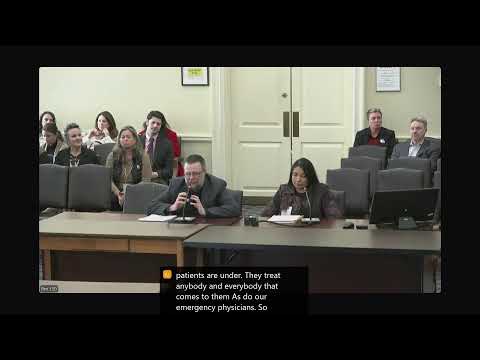
The committee heard multiple public witnesses urging the subcommittee to preserve Medicaid expansions and funding lines DLS flagged for cuts. Testimony highlighted the ACIS supportive-housing waiver, behavioral-health provider workforce concerns and the Healthy Babies Equity Act expansion.
The subcommittee did not take final votes during the hearing; members and staff asked for follow-up reports and supplemental budget coordination between MDH, DLS and DBM.
Ending note: Braun recommended continued quarterly reporting on enrollment trends; Moran said MDH and DBM hold monthly convenings with DLS to share updated data. Both the agency and DLS stressed that federal policy changes could materially alter the state outlook and urged the General Assembly to treat some savings recommendations cautiously until federal action is clarified.